

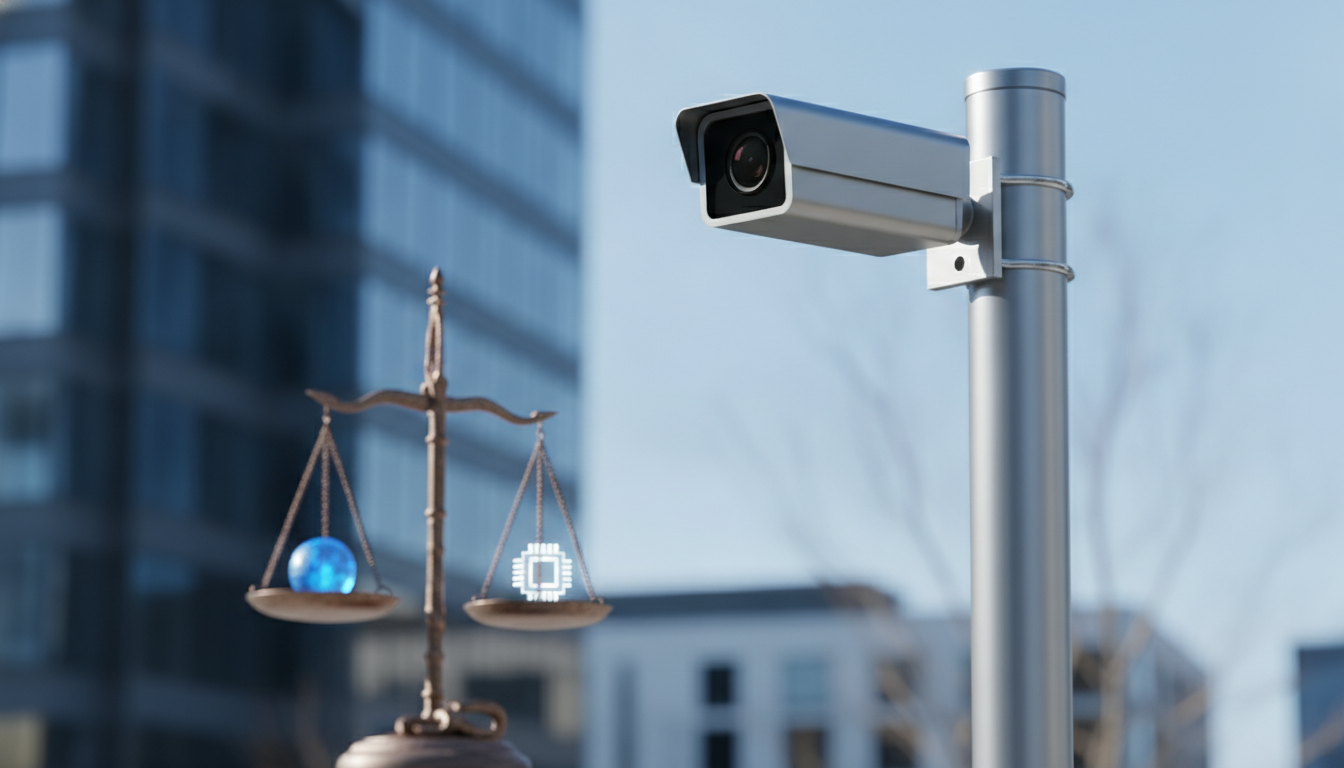
License plate recognition is useful because it makes vehicle access and parking decisions faster. It is controversial because the same plate read can become a searchable location record. The privacy battle is not about whether cameras can read plates. It is about who controls the database after the read happens.
The Core Tension
LPR technology solves real operational problems for HOAs, apartments, schools, storage facilities, towing operators, and gated properties. It can verify residents, approve visitors, document violations, open gates, and help investigate incidents. But when records are retained too long, shared too broadly, or connected to outside networks, a property-security tool can become a movement-tracking system.
Faster gate access, cleaner parking enforcement, safer pickup workflows, and better incident review.
Searchable vehicle histories, unclear retention, vendor access, weak audit logs, and uncontrolled sharing.
Purpose limits, role-based access, retention windows, audit trails, and transparent resident communication.
Why the Law Is Catching Up
State ALPR laws are fragmented. NCSL’s state-statute review describes both the public-safety value of ALPR and concerns about inaccuracy, unrestricted sharing, excessive retention, and privacy abuse. It also identifies state statutes that address ALPR use or retention.
California’s ALPR framework is one useful signal because it treats ALPR as a data system. California Civil Code Section 1798.90.5 defines ALPR around a searchable computerized database created from cameras and algorithms, while SB 274 in the 2025-2026 session adds sharper rules for public-agency ALPR access, contracts, sharing defaults, audit trails, training, and retention.
The law is moving toward a simple principle: if a plate read becomes a database record, someone must be accountable for how it is used.
The Private-Property Difference
Private-property LPR should not be treated the same way as a citywide law-enforcement network. An HOA gate, apartment garage, school pickup lane, or storage facility has a narrower purpose. The policy should keep it narrow.
| Deployment Type | Higher-Risk Pattern | Privacy-First Pattern |
|---|---|---|
| HOA gate | Unclear resident notice and broad data sharing | Resident/visitor access rules, short retention, board-approved sharing policy |
| Apartment parking | Continuous monitoring without defined enforcement purpose | Permit validation, visitor windows, documented exceptions |
| School pickup | Unnecessary collection outside pickup workflow | Authorized pickup matching and limited audit trail |
| Towing/private enforcement | Overbroad vehicle tracking | Violation-specific documentation and controlled retention |
What Buyers Should Demand From LPR Vendors
- Plain-language data ownership and data-use terms.
- Configurable retention windows.
- Role-based permissions for users and contractors.
- Audit logs for searches, exports, and external requests.
- No default access to broader networks unless expressly approved.
- Clear process for law-enforcement requests, subpoenas, and emergency exceptions.
- Camera placement support that avoids collecting unnecessary activity.
PLACA’s Position
The future of LPR should not be “more cameras everywhere.” It should be narrower, more accountable vehicle recognition for specific private-property workflows. That means HOAs, property managers, schools, and operators should be able to use LPR without surrendering control of their data to a broad external surveillance network.
Start with privacy-first HOA security systems, compare the operational workflow in HOA license plate recognition cameras, and use the technical foundation in the AI license plate recognition guide.
Sources Reviewed
Use LPR Without Losing Trust
PLACA helps private properties build vehicle recognition workflows around purpose, access control, and privacy-first data governance.
HOA Privacy-First Security Resource Center
For board-level planning, data ownership, vendor renewal, camera ownership, resident benefits, and contract-exit questions, see the HOA Privacy First Security Resource Center.