

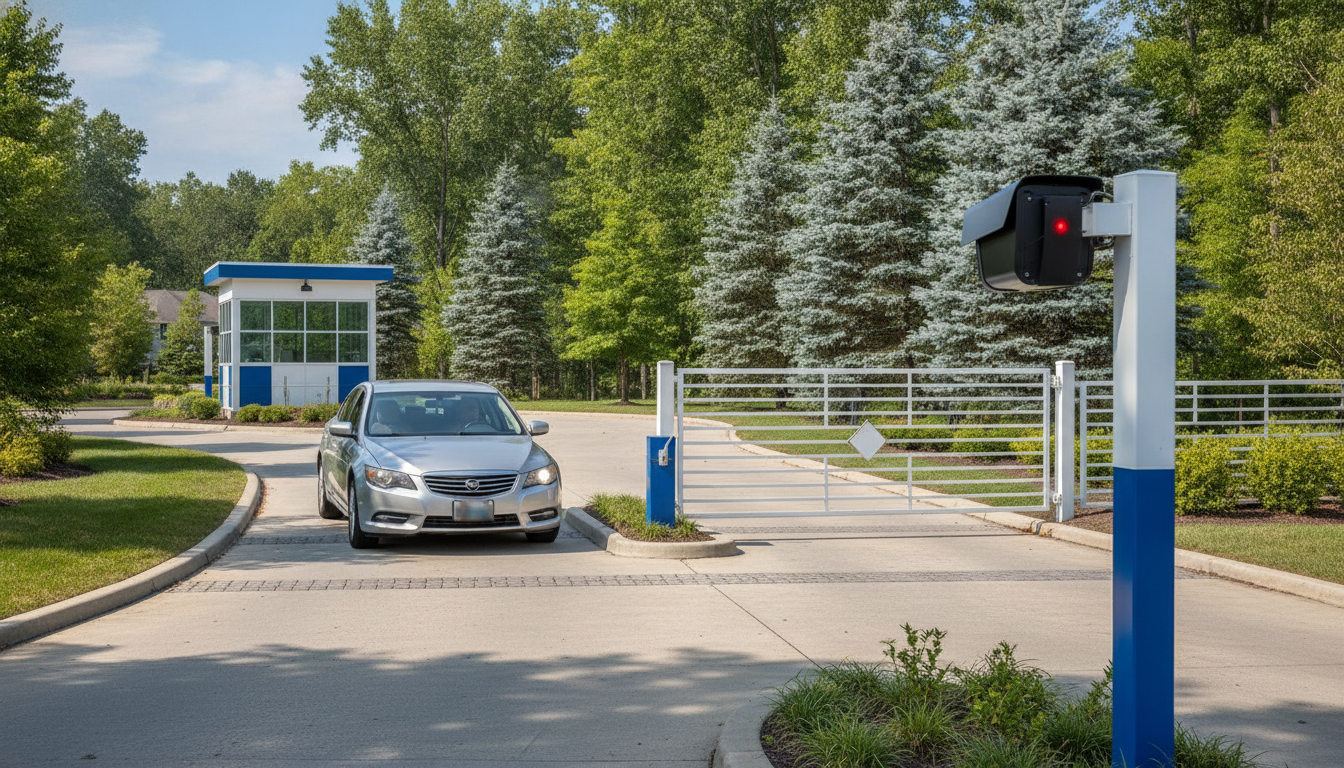
Direct answer: Texas HOAs should stop guest permit sharing by adopting one written rule the board applies the same way to every home, regardless of size, section, or how long the family has lived there — because in large master-planned communities, the biggest risk isn’t the sharing itself, it’s hundreds of homes hearing different versions of how the rule gets enforced. Define what counts as sharing, apply the same verification step everywhere, and keep a record that shows every case was handled the same way.
This guide is written for Texas HOA boards, community managers, and amenity or gate staff working in the state’s large single-family subdivisions — communities that often run several hundred to several thousand homes across multiple sections, with a volunteer board that can’t realistically know every resident personally. That scale changes the problem: a rule that works because “everyone just knows the Board President” at a fifty-home community falls apart at a fifteen-hundred-home one, where most residents will only ever interact with the association through a notice they didn’t expect.
Why scale is the real challenge, not detection
Texas HOAs tend to run bigger than the industry average — full amenity centers, multiple pools, several gated or manned entrances, and guest traffic that spikes hard around weekend gatherings, holidays, and pool season. A single shared guest pass showing up on five different plates over a busy weekend is easy to miss in a community that size unless someone is actively watching for the pattern, and it’s just as easy for the board to only catch it when a neighbor complains — which is exactly the scenario that turns a parking issue into an accusation that the board only enforces rules against people it doesn’t like. In a community large enough that most residents have never met most of their board members, the fairness of the process matters more than the strictness of it.
The goal isn’t to catch every shared pass. It’s to have one rule, applied the same way whether the flagged household is in the original phase of the development or the newest section, whether they’re on a first-name basis with a board member or not.
One standard, applied the same way in every section
| Situation | What gets checked | Consistent response |
|---|---|---|
| One guest pass, multiple plates within days | whether the household has a documented reason on file (multiple regular caregivers, a large extended family, a rideshare-dependent member) | contact the household — same script used association-wide, not customized per section |
| Pass used heavily around an event weekend | whether the household registered a one-time gathering exception in advance | treat pre-registered events differently from unexplained ongoing sharing |
| No response, or explanation doesn’t match the pattern | complete history — dates, plates, any gate or amenity-desk notes | expire the pass and issue the same written notice used everywhere in the community |
| Repeat after notice | whether the first case was documented and closed correctly | escalate to the board or management company as a body, not one gate attendant’s decision |
A process gate staff and management companies can run the same way every time
- Flag without assuming intent. A guest credential tied to multiple plates enters a review queue — no notice, no confrontation at the gate, at this stage.
- Verify with the household. One standard message, sent the same way to a founding-section homeowner as to someone who closed on their house last month.
- Classify. Documented exception, corrected entry, or unresolved sharing — each with a predetermined next step so gate staff and management aren’t improvising differently across shifts or sections.
- Close and record. Every case logged with date, section, outcome, and reviewer, so the board can answer “how many cases have we had, and were they handled the same way” without pulling records from multiple property managers or gate logs.
Where large-community rules break down — and how to route around it
The most common failure in big Texas HOAs isn’t the rule itself, it’s inconsistent application between sections or shifts: a weekday gate attendant enforcing strictly while a weekend or holiday attendant waves things through because the line is long. Build the exception path around that reality — a bounded, pre-approved allowance for high-traffic weekends and events, rather than leaving it to whoever is working the gate to decide on the spot. Disputes over governing-document authority, accessibility accommodations, or anything a resident threatens to escalate formally should go to the board’s counsel or management company leadership, not be resolved informally by amenity staff. For communities also dealing with broader guest-parking pressure beyond shared passes — overflow parking during events, non-resident use of amenity lots — it’s worth reviewing this alongside how Texas HOAs handle visitor parking abuse more generally, since boards often want one combined policy rather than two separate ones.
Testing it before it applies to every section
Pilot the rule in one or two sections first, ideally one older and one newer, since new-owner households and long-tenured ones tend to respond differently to a formal notice. Track how many flagged passes resolved with a simple confirmation, how many needed a documented exception for a legitimate large household or event, and how many repeated after notice. If enforcement looks noticeably different between sections or between weekday and weekend shifts, fix the gap before extending the rule community-wide — that inconsistency is exactly what turns into a formal complaint at a board meeting. Keeping a shared parking report record across the whole community makes that comparison possible without manually reconciling logs from multiple gates.
Before the board adopts this community-wide
- One written definition of sharing, approved by the board, that applies identically regardless of section, lot size, or tenure.
- A single process owner across the community — not a different informal standard per gate or per property manager.
- A pre-approved exception path for large events and gatherings, so gate staff aren’t making judgment calls under pressure on a busy weekend.
- Confirmation from the association’s counsel or management company that the notice-and-escalation steps are consistent with the governing documents before wider rollout.
- A defined threshold for when a repeat case moves into the community’s standard violation or towing process, reviewed against the rule-change-before-towing workflow to avoid enforcing a policy that residents were never formally notified of.
Related PLACA.AI planning resources
Risk questions
What is the first decision for stopping guest-permit sharing for Texas HOAs?
Adopt one written definition of sharing and one response process, board-approved, before enforcement begins in any single section.
What belongs in the pilot?
A normal case, a pre-registered event exception, and a repeat case that required escalation beyond gate or amenity staff.
What blocks expansion community-wide?
Inconsistent enforcement between sections or shifts, unclear authority to issue notices, or a dispute that should have gone to counsel but was resolved informally instead.
Plan a limited workflow review
Bring the current rule, process, exceptions, and success criteria for stopping guest-permit sharing for texas hoas. PLACA.AI can help evaluate a bounded pilot without assuming another property’s workflow is the right answer.
Editorial refresh: July 22, 2026. Independently confirm current product capabilities, third-party features, pricing, contracts, governing requirements, and local rules before acting.
Data source: Community Associations Institute