
hoa parking enforcement software
HOA parking enforcement has traditionally relied on one tool: call a towing company. A vehicle violates the rules, a tow is dispatched, the vehicle owner gets an expensive surprise. The relationship between HOA and resident sours. The violating vehicle is back in a week.
Towing is blunt. It’s expensive for residents, legally complex for HOAs, and does nothing to prevent repeat violations. Many communities are looking for approaches that enforce the rules without relying entirely on tow trucks as the primary deterrent.
Related HOA enforcement workflows:
Why Over-Reliance on Towing Creates Problems
Towing-first enforcement has several documented drawbacks:
- Legal exposure: HOA towing authority varies significantly by state. Improperly authorized tows can result in liability for the HOA.
- Escalation risk: Towing reliably generates disputes, appeals, and occasionally legal action. One improperly towed vehicle can cost an HOA far more in legal fees than the violation was worth.
- No deterrence: Residents learn that enforcement is inconsistent (not every violation results in a tow) and that the penalty is recoverable (pay the tow yard, get the car back). Behavior rarely changes.
- Resident relations: Towing a resident’s guest or a delivery vehicle due to a miscommunication damages community trust.
Methods That Work Without a Tow Truck
1. Warning Notices + Documentation
For first-time violations, a photographed notice placed on the vehicle is often sufficient. The key is documentation: photograph the vehicle, the plate, the location, and the time. A documented warning that goes into a system record is far more useful than a verbal complaint.
Repeat violations in the documented record strengthen the HOA’s legal position if escalation is ever needed.
2. License Plate Recognition Monitoring
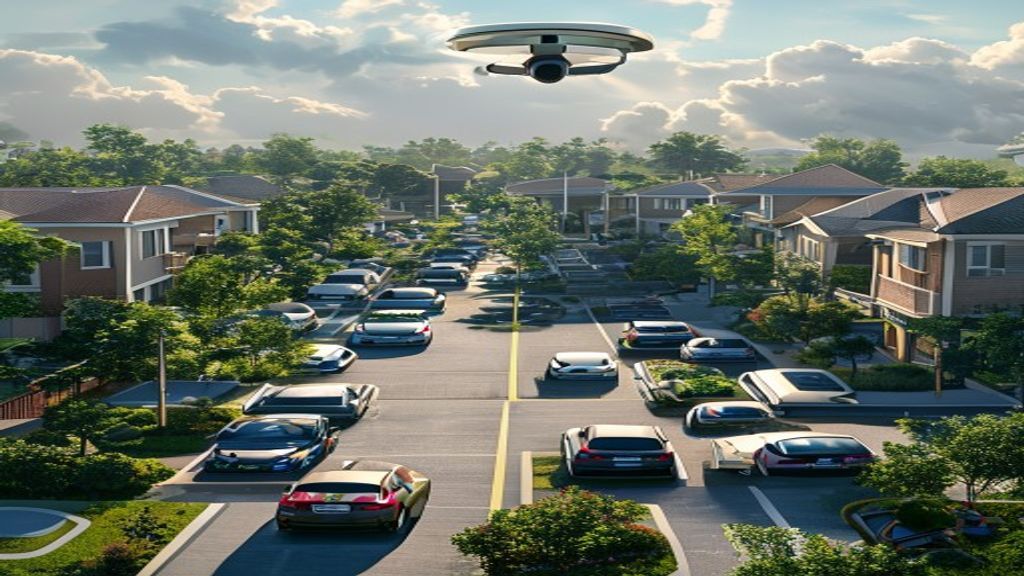
LPR cameras mounted at community entry points or parking lot entrances can automatically log every vehicle that enters — including timestamp, plate, and image. This gives the HOA a complete, timestamped record of parking patterns without requiring staff to patrol.
PLACA.AI’s GuardCam is designed specifically for HOA parking monitoring. Vehicles not on the resident authorized list are flagged automatically, allowing management to take targeted action rather than broad enforcement sweeps.
💡 Quick tip: Use PLACA.AI’s School Pickup Wait-Time Estimator to see how much time your school could save with automated LPR dismissal.
3. Permit Issuance and Tracking
Many HOAs underutilize digital permit systems. Instead of physical hang tags (which get transferred and shared), digital permits tied to license plates give the HOA a real-time view of which vehicles are authorized. Combined with LPR monitoring, unauthorized vehicles are immediately visible without any patrol effort.
4. Guest Registration Systems
A large share of HOA parking violations involve guests, not residents. A simple guest registration process — even a web form residents submit before a visit — eliminates the most common source of “unregistered vehicle” flags and focuses enforcement on actual violations rather than registered guests.
5. Escalating Consequence Framework
A documented escalation framework (warning, fine, fine + tow authorization, tow) creates predictability that pure tow-on-sight enforcement doesn’t. Residents know exactly what will happen if a violation is repeated. The HOA has legal cover at each step. Towing becomes the last resort rather than the first response.
When Towing Is Still the Right Tool
Some violations require a tow: fire lane blocking, handicapped space violations without a permit, vehicles that have been abandoned for days, or vehicles that block other residents from accessing their garages. The goal isn’t to eliminate towing — it’s to reserve it for cases where it’s genuinely the appropriate response.
For the other 80% of parking violations — non-resident vehicles, expired registration, guest overstays — the methods above are cheaper, less contentious, and more effective at creating lasting behavior change.
See how PLACA.AI helps HOAs automate parking monitoring: resident community solutions and GuardCam. For a complete overview of HOA parking enforcement approaches, see HOA parking enforcement methods.
Ready to Cut Your School’s Carline Wait Time?
PLACA.AI’s LineCam reads parent license plates as they pull in — no app, no paper tags, no manual checking. Students are queued and called before the car even reaches the front.
Book a Free 15-Min Demo
Or calculate your school’s wait time first
No commitment required. Most demos are 15 minutes.
Internal Resources
- ALPR Personal Device Access Controls Checklist
- How Large Lot Patrol Teams Can Compare Patrol Software Workflows With Mobile LPR Workflows
- How Florida Associations Can Manage Seasonal Resident Parking Changes Without Creating Resident Friction
- How Gated Communities Can Handle EV Charging Space Misuse Without Creating Resident Friction
- How Night Patrol Teams Can Verify Permits Faster With Mobile LPR Workflows
Related Resources
Towing and Parking Enforcement LPR Resources
Explore cloud-first LPR workflows for tow trucks, patrol vehicles, apartment parking enforcement, HOA patrols, and private-property towing operations.
Data source: Community Associations Institute