

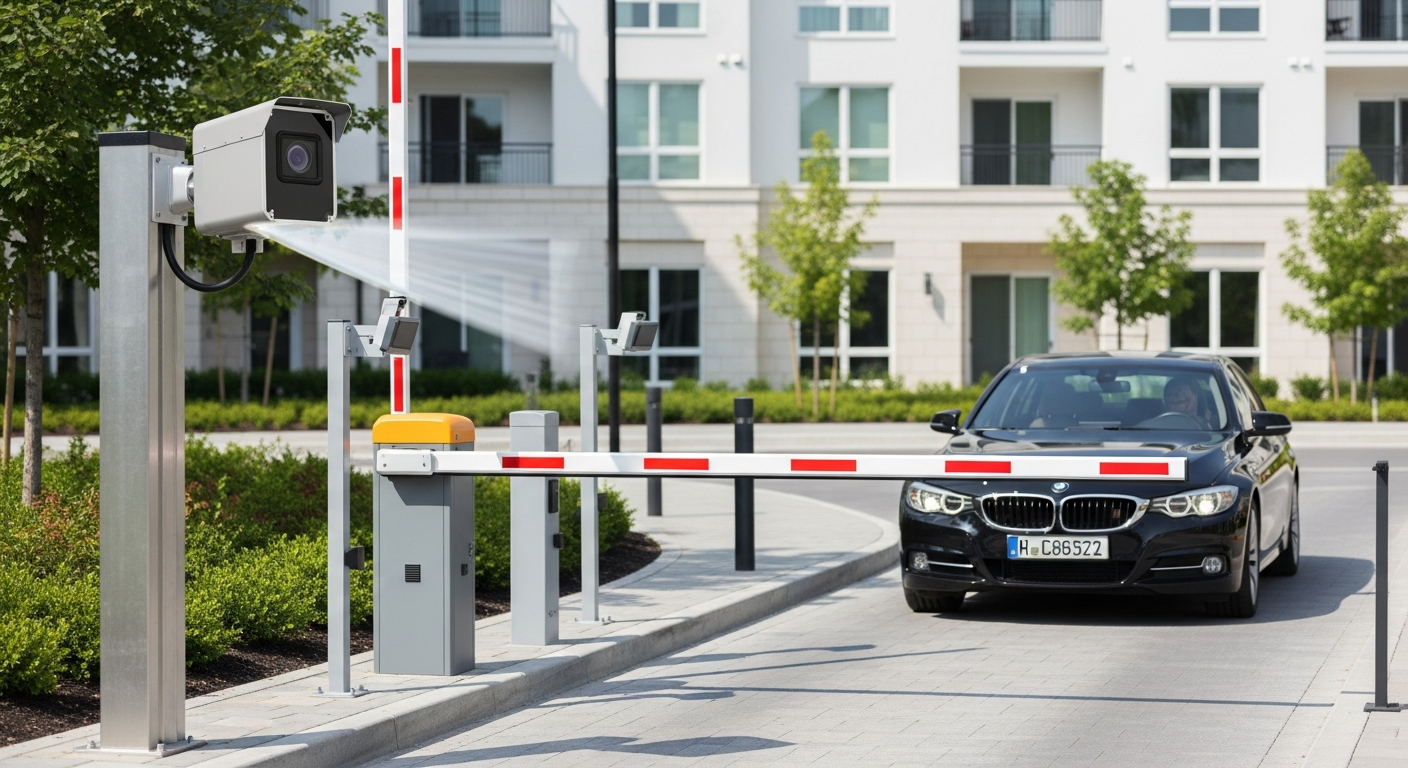
license plate recognition apartment gates
How License Plate Recognition Opens Apartment Gates
A practical guide from Placa for buyers comparing camera placement, LPR workflows, and private-property vehicle recognition options.
Why This Matters
License plate recognition is rarely solved by buying a camera at random. The camera must see the plate clearly, at the right angle, in the right lighting, at the expected speed. Then the software must turn that read into a useful vehicle event: a searchable log, access decision, alert, report, or evidence record.
Capture First
Check lane geometry, mounting height, distance, approach angle, glare, and whether cars stop, crawl, or pass at speed.
Workflow Second
Decide what should happen after a plate is read: open a gate, flag a vehicle, search history, notify staff, or document a parking event.
Recommendation Last
Only after those conditions are known should a camera tier be selected.
What to Compare
- Lane count and whether each lane needs its own capture zone.
- Vehicle speed and whether radar-assisted or radar-triggered capture is useful.
- Night performance, IR behavior, and headlight glare.
- Power and network access, including cellular and wireless options.
- Gate controller or parking workflow integration.
- Privacy policy, retention rules, user permissions, and search access.
How Placa Helps
Placa is a cloud AI LPR platform, not a generic camera storefront. The goal is to match the camera to the site, connect the camera to cloud LPR workflows, and help teams use the resulting vehicle events for safer, cleaner operations.
Related Placa Resource
Related Placa Resource
Camera Recommendation
Related Placa Resource
Related Placa Resource
Image Recommendations
Hero image: realistic private-property entrance with a visible LPR camera and subtle Placa dashboard overlay. Diagram: camera angle, capture zone, plate read event, and cloud dashboard. AI prompt: Create a clean modern SaaS-style image showing a private-property entrance with vehicles entering, an LPR camera mounted near the lane, subtle plate recognition overlay, and a Placa cloud dashboard UI. No police, no citations, no third-party logos.
FAQ
What should I know about how LPR opens apartment gates?
How License Plate Recognition Opens Apartment Gates should be evaluated around plate capture conditions, camera placement, lighting, vehicle speed, lane count, and how the result connects to Placa cloud LPR workflows.
Is software or hardware more important?
Both matter. Software organizes plate events, search, alerts, and permissions, but the camera still needs a usable view of the plate.
What should the next step be?
The next step is a site assessment that reviews entrance geometry, speed, lighting, power, network access, and gate or parking workflow needs.
See Which Camera Fits Your Site
Share your entrance layout, speed, lane count, and current gate or parking workflow.
Data reference: EFF: Automated License Plate Readers
Data reference: EFF: Automated License Plate Readers
Data reference: EFF: Automated License Plate Readers
How License Plate Recognition Opens Apartment Gates
License plate recognition at apartment gates replaces manual codes and fobs with camera-based vehicle identification. As a registered vehicle approaches, the LPR camera reads the plate, matches it against the allow-list, and sends a signal to open the gate automatically.
How long does gate opening take with LPR?
From the moment a registered plate enters the camera’s read zone to gate open signal, LPR systems typically take 0.8 to 1.5 seconds. This is comparable to or faster than key fob response time, and significantly faster than rolling down a window to enter a keypad code.
What happens when a visitor arrives at an LPR apartment gate?
Unregistered plates trigger a visitor workflow. The gate may open if the community uses a fully open visitor policy, or a call box may activate for resident-approved entry. Property managers can configure temporary visitor passes with date and time restrictions through the management portal.
How does Placa.ai handle plate changes for apartment residents?
Residents notify property management of new vehicles through a self-service portal or mobile app. Management updates the plate in the system, typically within two minutes. Old plates are automatically archived with an access log showing all entries made under the previous registration.
Can LPR apartment gates handle multiple vehicles per unit?
Yes. Most apartment LPR deployments allow two to four registered plates per unit. Fleet registrations for service providers, maintenance crews, or package delivery vehicles can be added with time-restricted access windows so they only enter during approved hours.
License plate recognition for apartment gates delivers faster entry, better access audit trails, and lower operational overhead than keypad or fob systems for multi-family residential properties.
About Placa.ai
Placa.ai is a license plate recognition platform designed for property managers, HOA boards, school administrators, and parking operators who need reliable vehicle identification without enterprise-level complexity. The system pairs high-accuracy LPR cameras with cloud software that delivers real-time alerts, access logs, and direct integration with gate control systems.
Communities and facilities using Placa.ai gain automated vehicle identification that works around the clock. Setup typically takes one to two hours per camera, and the management dashboard is ready immediately after camera enrollment. All plate data is encrypted in transit and at rest, stored in compliance with applicable data protection standards, and accessible through the web portal or mobile app.
Placa.ai serves residential communities, commercial parking facilities, self-storage operators, K-12 schools, and private road associations across the United States. The platform scales from single-camera residential installations to multi-site enterprise deployments with centralized management.
To learn more or schedule a demo, visit placa.ai.
Organizations evaluating LPR technology for their property or facility can request a site assessment from Placa.ai. Our team reviews approach geometry, lighting conditions, and gate hardware to recommend the camera model and mounting configuration best suited to each location. Deployments typically begin within one to two weeks of hardware selection.