

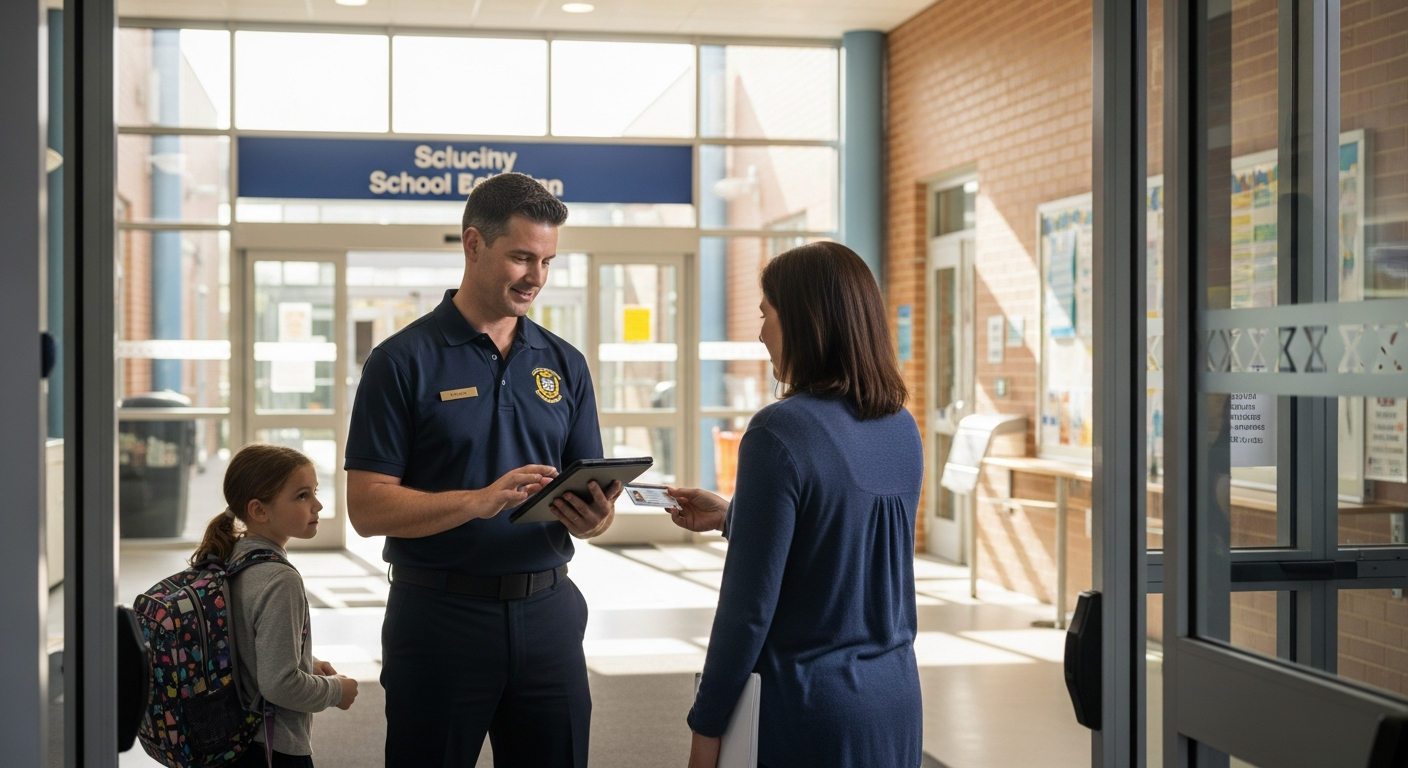
Unauthorized pickup is one of the most serious safety risks in school dismissal. A digital authorization system with staff approval gives schools a clear, defensible process for every pickup.
How Schools Can Prevent Unauthorized Student Pickup
Most schools rely on staff recognition and paper tags to prevent unauthorized pickup. Both depend entirely on individual staff memory and physical verification – systems that work until they don’t. When they fail, there’s often no documentation and no alert system.
Why Unauthorized Pickup Is Hard to Prevent With Manual Systems
Manual pickup systems have three structural weaknesses:
- No real-time authorization check: Staff must recognize the person or the tag – not verify against a current list
- No alert for unrecognized vehicles: An unfamiliar vehicle arriving during busy dismissal often goes unnoticed
- No record after the fact: If a pickup goes wrong, there’s nothing to review
A school pickup line app with a real-time authorization check closes all three gaps.
How Digital Authorization Prevents Unauthorized Pickup
Real-Time List Check at Every Pickup
Every arriving vehicle or QR code is checked against the student’s current authorized pickup list before staff is notified. If the person is not on the list, staff receives an alert – before the vehicle reaches the front of the line.
Parent-Controlled Authorization Management
Parents manage their own authorized pickup list. They add people, set day-of-week restrictions, create time-limited authorizations, and revoke access instantly when circumstances change – including custody changes, relationship changes, or emergency situations.
Staff Approval Required for Every Release
Even when a vehicle is recognized and authorized, staff must still actively approve the dismissal with a tap. There is no automatic release. Every dismissal has a named staff approver in the log.
Flagged Vehicle Alerts
When an unrecognized vehicle or an unauthorized plate appears in the pickup line, staff receives an immediate alert with vehicle information, a camera image, and a timestamp. Staff follows the school’s existing protocol – but now has documentation of the event regardless of outcome.
Full Pickup Audit Trail
Every pickup – authorized, unauthorized, manually approved – is logged with student name, vehicle, authorized person, timestamp, and approving staff member. This log is searchable and exportable for incident review. See the FERPA and privacy overview for data handling details.
What Happens When an Unauthorized Person Shows Up
In a digital dismissal system, the process is:
- Unrecognized vehicle or unauthorized QR scan is detected
- Staff receives an alert with vehicle details before the car reaches the front
- Staff follows existing school protocol (contact parent, hold student, document the event)
- The event is logged with all available vehicle information and the staff response
This is the same decision staff would make manually – but now with pre-notification, documentation, and an audit trail. See the school pickup FAQ for more on flagged vehicle handling.
Learn about QR code and license plate pickup options for your school
Source: National Center for Education Statistics
Related planning resource: testing pickup authorization changes in one lane first.
Related planning resource: confirm authorized vehicles before releasing students.