

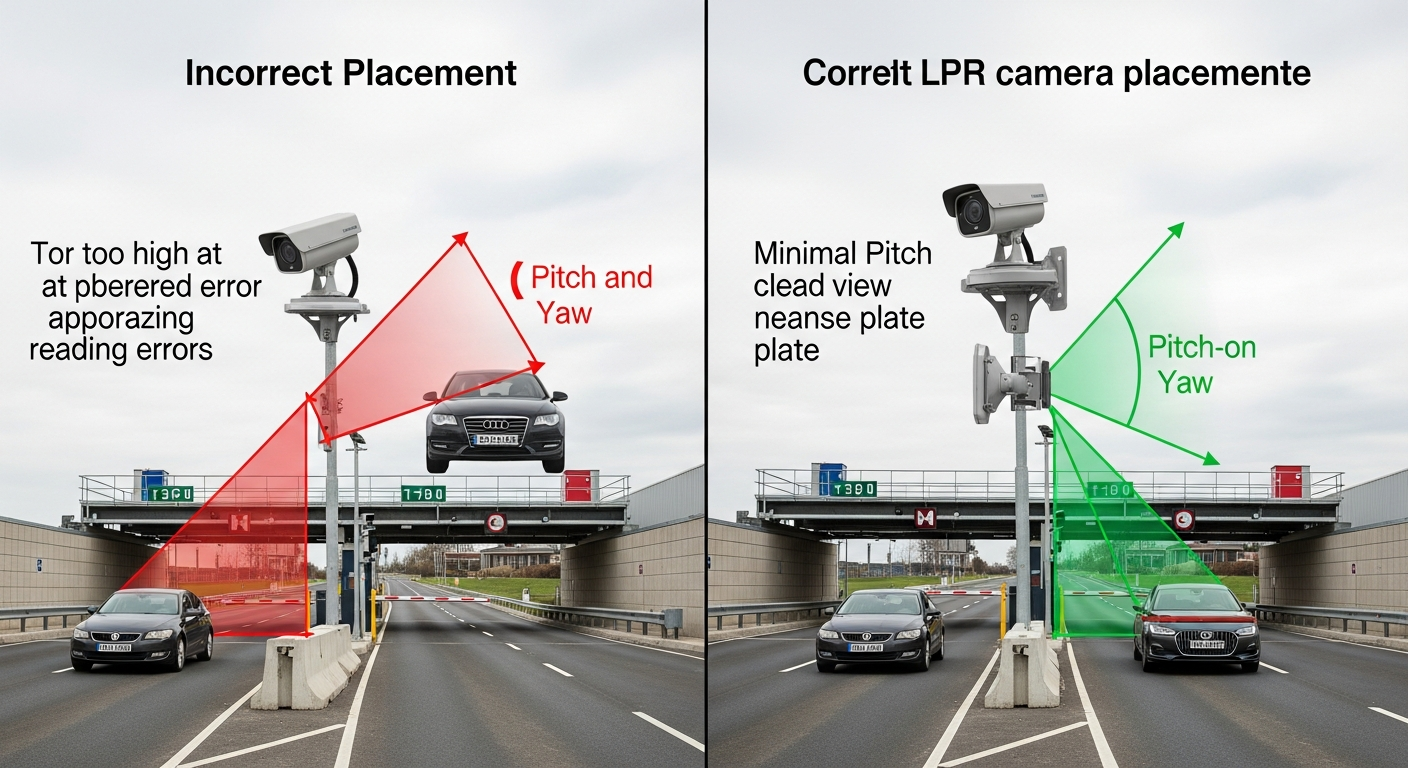
Multi-Lane LPR Camera Placement Mistakes to Avoid
A practical guide from Placa for buyers comparing camera placement, LPR workflows, and private-property vehicle recognition options.
Why This Matters
License plate recognition is rarely solved by buying a camera at random. The camera must see the plate clearly, at the right angle, in the right lighting, at the expected speed. Then the software must turn that read into a useful vehicle event: a searchable log, access decision, alert, report, or evidence record.
Capture First
Check lane geometry, mounting height, distance, approach angle, glare, and whether cars stop, crawl, or pass at speed.
Workflow Second
Decide what should happen after a plate is read: open a gate, flag a vehicle, search history, notify staff, or document a parking event.
Recommendation Last
Only after those conditions are known should a camera tier be selected.
What to Compare
- Lane count and whether each lane needs its own capture zone.
- Vehicle speed and whether radar-assisted or radar-triggered capture is useful.
- Night performance, IR behavior, and headlight glare.
- Power and network access, including cellular and wireless options.
- Gate controller or parking workflow integration.
- Privacy policy, retention rules, user permissions, and search access.
How Placa Helps
Placa is a cloud AI LPR platform, not a generic camera storefront. The goal is to match the camera to the site, connect the camera to cloud LPR workflows, and help teams use the resulting vehicle events for safer, cleaner operations.
Related Placa Resource
Related Placa Resource
Camera Recommendation
Related Placa Resource
Related Placa Resource
Image Recommendations
Hero image: realistic private-property entrance with a visible LPR camera and subtle Placa dashboard overlay. Diagram: camera angle, capture zone, plate read event, and cloud dashboard. AI prompt: Create a clean modern SaaS-style image showing a private-property entrance with vehicles entering, an LPR camera mounted near the lane, subtle plate recognition overlay, and a Placa cloud dashboard UI. No police, no citations, no third-party logos.
FAQ
What should I know about multi lane LPR camera placement?
Multi-Lane LPR Camera Placement Mistakes to Avoid should be evaluated around plate capture conditions, camera placement, lighting, vehicle speed, lane count, and how the result connects to Placa cloud LPR workflows.
Is software or hardware more important?
Both matter. Software organizes plate events, search, alerts, and permissions, but the camera still needs a usable view of the plate.
What should the next step be?
The next step is a site assessment that reviews entrance geometry, speed, lighting, power, network access, and gate or parking workflow needs.
See Which Camera Fits Your Site
Share your entrance layout, speed, lane count, and current gate or parking workflow.
FAQs: Multi-Lane LPR Camera Placement Mistakes
How far apart should LPR cameras be placed in a multi-lane entrance?
In multi-lane entrances, each lane typically requires its own dedicated LPR camera positioned to cover that lane’s capture zone without interference from adjacent lanes. Camera spacing depends on the lane width, typically 10 to 14 feet for standard vehicle lanes. Overlapping coverage between cameras can cause the system to capture the same plate twice or read a plate from the wrong lane, leading to incorrect access decisions. The camera angle and height should be optimized to read plates straight-on from a slight downward angle, typically 15 to 25 degrees below horizontal, which minimizes glare and maximizes plate character readability.
What is the biggest mistake in multi-lane LPR camera placement?
The most common and costly mistake in multi-lane LPR deployments is installing a single wide-angle camera to cover multiple lanes simultaneously. While this approach saves on hardware costs upfront, wide-angle lens distortion at the edges of the frame significantly reduces plate read accuracy for vehicles in the outer lanes. License plate characters become skewed and difficult for the recognition engine to parse. Best practice is to install one camera per lane with each camera positioned to cover only its designated lane. This configuration delivers consistently high accuracy across all lanes and simplifies troubleshooting when read rates decline.
Should multi-lane LPR cameras be mounted high or low?
Camera mounting height in multi-lane applications involves a trade-off between read angle and lane coverage. Cameras mounted at 8 to 12 feet above the pavement provide a good downward angle for front plate reading while minimizing the chance that tall vehicles block the view of adjacent lane plates. Cameras mounted too low create a nearly horizontal reading angle that increases lens glare and makes plates on raised trucks or SUVs difficult to read. Cameras mounted too high create an extreme downward angle that makes plates on low-profile vehicles difficult to read. Most multi-lane deployments find the sweet spot between 8 and 12 feet depending on the specific vehicle mix using the facility.
About Placa.ai
Placa.ai is an artificial intelligence platform specializing in vehicle access control and property automation for schools, homeowners associations, parking facilities, self-storage operators, and commercial campuses. Our license plate recognition technology delivers fast, accurate, and privacy-respecting vehicle identification that helps property managers streamline operations, improve security, and reduce dependence on manual processes. Unlike traditional surveillance vendors, Placa.ai is designed from the ground up to keep data within your control, with transparent retention policies and no mandatory third-party data sharing. Our customers include school districts across the United States, HOA communities, parking operators, and corporate campus managers who rely on Placa to make their properties safer and more efficient every day. Learn more about how Placa.ai can transform your vehicle access workflow by requesting a free demonstration from our team.
Ready to improve your facility’s vehicle access control and create comprehensive audit logs? Placa.ai’s license plate recognition solutions are designed for rapid deployment with minimal infrastructure changes. Our team provides end-to-end support from site survey through installation, configuration, training, and ongoing technical support. Contact our team to schedule a free consultation and demonstration for your specific facility type and access control requirements. Every deployment is backed by our performance guarantee ensuring that your system meets the read accuracy specifications required for your use case from day one of operation.
Internal Resources
- How Tow Dispatch Managers Can Capture Better Evidence Before A Tow With Mobile LPR Workflows
- How Venue Parking Managers Can Speed Up Vehicle Retrieval Using Ticketless Vehicle Recognition
- Flock Safety Alternatives for HOA Communities
Data source: Electronic Frontier Foundation: License Plate Readers