

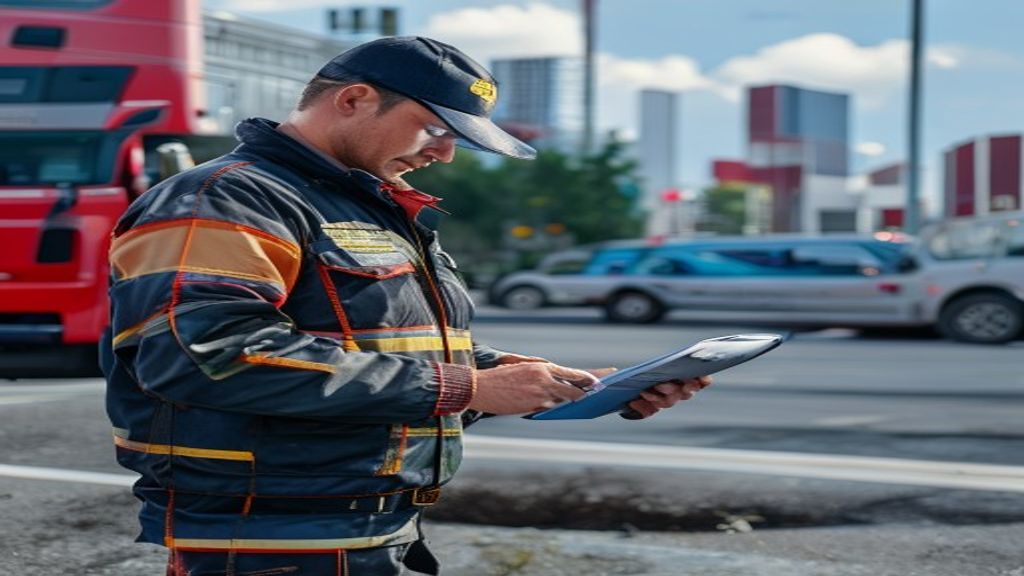
towing company lpr software
For years, towing company enforcement on private property meant a supervisor walking a parking lot with a clipboard, photographing vehicles, calling the registered owner, and dispatching a tow truck. It worked — slowly, inconsistently, and with no data trail that would hold up in a dispute.
License plate recognition software has fundamentally changed what is possible for towing enforcement. Here is why operators are adopting it, and what to look for when choosing a platform.
Why LPR Changes Towing Enforcement
From Reactive to Proactive
Without LPR, towing enforcement is reactive: someone notices a violation, reports it, and a tow is eventually dispatched. With LPR, a camera mounted at the property entrance logs every incoming vehicle. An operator can immediately see which vehicles are not on the authorized tenant list — before they park, rather than after a complaint is filed hours later.
Complete Activity Logs
LPR platforms create a timestamped record of every vehicle that entered or exited the property, every violation flagged, every tow authorized. In disputes — which are common in private property towing — this documentation is the difference between a defensible enforcement action and a she-said/they-said conflict with no evidence.
Violation Pattern Recognition
LPR data reveals patterns that manual enforcement misses: a tenant who regularly parks in reserved spaces after 8 PM, a visitor vehicle that appears at the same location every week (suggesting unauthorized regular use of a reserved space), a recurring non-resident who has been towed twice before. Pattern data allows targeted enforcement rather than random sweeps.
💡 Quick tip: Use PLACA.AI’s School Pickup Wait-Time Estimator to see how much time your school could save with automated LPR dismissal.
What to Look For in Towing Company LPR Software
Camera Options: Fixed vs. Mobile
Towing LPR systems use two types of cameras:
- Fixed cameras — mounted at property entrances; log all entering/exiting vehicles; best for continuous monitoring of a single property
- Mobile LPR — mounted on patrol vehicles; reads plates as the vehicle drives through a parking lot; best for covering multiple properties or large lots quickly
For most private property enforcement use cases, fixed cameras at entry points provide the most complete coverage with the least ongoing operational effort.
Authorization Database Management
The system needs a way to maintain the authorized vehicle list for each property — typically tenant plates and registered guest plates. Look for:
- Property manager self-service portal to update authorized vehicles without calling the towing company
- Guest registration capability (so short-term authorized guests can be added quickly)
- Support for multiple properties in a single dashboard
Tow Authorization Workflow
In most jurisdictions, a tow from private property requires documented authorization from the property owner or manager. The LPR platform should generate this authorization documentation automatically — including the plate image, timestamp, violation type, and property information — so the towing company has complete documentation before the tow is initiated.
Dispute Resolution Documentation
Expect disputes. The LPR system’s documentation capability is a key risk management tool:
- Plate image with timestamp at time of violation flagging
- Chain of custody for the tow authorization
- Vehicle activity log showing arrival time, parking duration, and any prior violations
Multi-Property Dashboard
Towing companies typically service multiple properties. A single dashboard that shows all properties, all active violations, and all pending tow authorizations — without requiring a separate login per property — significantly reduces administrative overhead.
How to Choose
Questions to ask any towing LPR vendor:
- Does the platform support both fixed and mobile LPR, or only one?
- How does the property manager update the authorized vehicle list?
- What documentation does the system generate to support tow authorization?
- How does the platform handle disputes — what records are available?
- What is the pricing model — per-property, per-camera, or per-tow?
- Is there a mobile app for field operators?
- What jurisdictions and towing regulations does the platform support?
PLACA.AI’s enforcement platform is designed for private property towing operators, HOAs, and commercial parking operators. See the towing company software page for specific capabilities, and use the towing profitability calculator to estimate your ROI from LPR-based enforcement.
Ready to Cut Your School’s Carline Wait Time?
PLACA.AI’s LineCam reads parent license plates as they pull in — no app, no paper tags, no manual checking. Students are queued and called before the car even reaches the front.
Book a Free 15-Min DemoCalculate your wait time first
No commitment required. Most demos are 15 minutes.
Internal Resources
- Parking Signage Disclosure Checklist for Private Lots
- How Small Towing Companies Can Document Parking Violations With Mobile LPR Workflows
- How Event Valet Companies Can Document Vehicle Condition Issues Using Ticketless Vehicle Recognition
- Patrol Software vs. Mobile LPR: A Practical Comparison for HOA Patrol Operators
- How Apartment Enforcement Teams Can Prioritize High-Risk Lots With Mobile LPR Workflows
Related Resources
How Towing Companies Use LPR Software
What problems does LPR software solve for towing companies?
Towing companies operating enforcement contracts for private properties face two common problems: correctly identifying vehicles authorized to be on the property and documenting violations for dispute resolution. LPR software addresses both. The system reads every plate that enters a monitored lot, compares it against the authorized or permit list, and flags unauthorized vehicles with a timestamped image. If a vehicle owner disputes the tow, the operator has a complete photographic record of the violation.
Does LPR software replace the need for on-site towing staff?
No. LPR software does not replace towing staff – it improves how they operate. Tow operators still need personnel to physically respond to flagged vehicles, verify the violation on-site, and manage the tow. What LPR software eliminates is the need to manually patrol every section of a lot at regular intervals. The camera monitors continuously, and the operator is alerted only when an unauthorized vehicle is identified, making the patrol function much more efficient.
How do towing companies integrate LPR with their existing workflows?
Most towing companies with enforcement contracts use LPR software that connects to a mobile app. When a vehicle is flagged, the on-call driver receives an alert with the location, plate, and violation photo. The driver confirms the violation on arrival and initiates the tow through the app, which logs the event with a second timestamp and photo. This digital chain of custody simplifies documentation and reduces successful disputes from vehicle owners.
About Placa.ai
Placa.ai is a license plate recognition platform designed for property managers, HOA boards, school administrators, and parking operators who need reliable vehicle identification without enterprise-level complexity. The system pairs high-accuracy LPR cameras with cloud software that delivers real-time alerts, access logs, and direct integration with gate control systems.
Communities and facilities using Placa.ai gain automated vehicle identification that works around the clock. All plate data is encrypted in transit and at rest, stored in compliance with applicable data protection standards, and accessible through the web portal or mobile app.
To learn more or schedule a demo, visit placa.ai.
Industry reference: Texas Department of Transportation – Towing Industry Resources
Related planning resources: YNOT Towing alternative and TowXpo 2025 PLACA.AI visit.
Towing and Parking Enforcement LPR Resources
Explore cloud-first LPR workflows for tow trucks, patrol vehicles, apartment parking enforcement, HOA patrols, and private-property towing operations.