

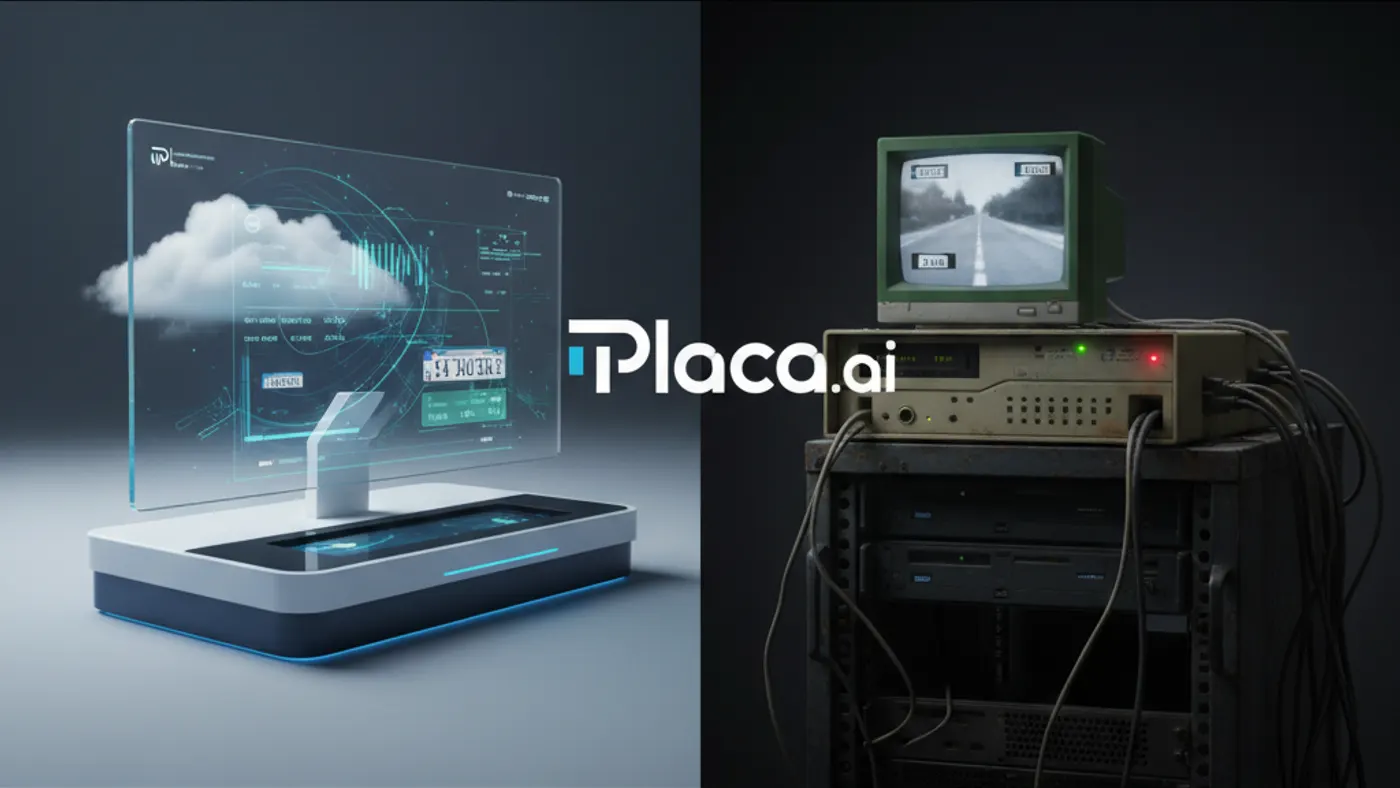
Direct answer: Choose cloud or local architecture by scoring connectivity tolerance, remote access, camera compatibility, retention control, support ownership, cybersecurity responsibilities, and failure recovery. Neither architecture is universally better.
This guide is for technical buyers, integrators, security leads, IT teams, and property operators and focuses specifically on choosing cloud LPR software or a local DVR-based system. The page supplies a decision framework. It does not override posted restrictions, emergency procedures, procurement terms, or qualified advice.
The failure mode to solve
Buyers often compare interface features while leaving the operating model undefined. The harder question is who maintains storage, software, remote access, backups, user permissions, and incident recovery for the life of the system.
Example: A portfolio manager may value remote review across properties, while a critical site with unreliable backhaul may value local continuity. A hybrid design can be considered, but only after ownership of each component is clear.
Weighted architecture matrix
| Decision point | Evidence or control | Required response |
|---|---|---|
| Intermittent internet | Local recording may preserve footage; cloud event delivery needs a tested retry design | Weight continuity and recovery |
| Multi-property access | Cloud management can simplify centralized review when supported | Weight role control and portfolio operations |
| Existing cameras and DVR | Compatibility, streams, credentials, and image quality must be validated | Weight reuse versus replacement |
| Restricted network environment | Local deployment may fit constraints but shifts maintenance to the owner | Weight IT capacity and patch responsibility |
From policy to daily operation
- Step 1. Inventory cameras, streams, network paths, storage, and current owners.
- Step 2. Write the failure scenarios before vendor demonstrations.
- Step 3. Score both architectures using the same weighted criteria and disqualifiers.
- Step 4. Run a camera and network pilot with success and recovery tests.
For choosing cloud LPR software or a local DVR-based system, the named owner should document the approved rule, baseline, and result of each test. The owner should sign off on evidence collected in the real workflow, including the least convenient failure case.
Stop conditions and escalation
If the buyer cannot identify who will patch, monitor, back up, and recover a local server, a DVR-centered design carries hidden operational risk. If connectivity cannot support cloud delivery, that risk must also be tested rather than ignored.
Do not allow exceptions to remain open-ended. Assign an expiry, a responsible person, and a final disposition.
A bounded pilot plan
A small pilot makes mistakes recoverable. Expand only after the accountable owner accepts the result and unresolved risks.
- supported camera streams verified
- event delivery and recovery success
- time to restore service after a simulated failure
- administrative tasks requiring site visits
- storage and retention behavior matching policy
Define what counts, who counts it, and when the scorecard will be reviewed.
Acceptance evidence
- Write the purpose and non-goals for choosing cloud LPR software or a local DVR-based system and name the accountable owner.
- Verify the process with the actual technical buyers, integrators, security leads, IT teams, and property operators who will use, administer, or review it.
- Test a correction, an unavailable-system path, and the exception described on this page.
- Confirm current pricing, contract terms, support, integrations, and data handling directly with each provider.
- Use supported camera streams verified as one acceptance signal and record what evidence can stop the rollout.
Related PLACA.AI planning resources
Operational questions
Does cloud LPR require replacing existing cameras?
Not always. Compatibility depends on the camera, stream, credentials, image quality, and the selected platform; test the actual devices.
Is local storage automatically more private?
No. Privacy depends on purpose, access, retention, security, sharing, and audit controls—not only storage location.
Should cost decide the architecture?
Cost matters, but compare the full ownership model including hardware, maintenance, connectivity, support, upgrades, and staff time.
Review camera and software compatibility
Bring the rules, current process, known exceptions, and success criteria for choosing cloud LPR software or a local DVR-based system. PLACA.AI can help evaluate a limited pilot without presuming that another property’s hardware or workflow is the right answer.
Editorial refresh: July 22, 2026. Before using this framework for choosing cloud LPR software or a local DVR-based system, independently confirm current product capabilities, third-party features, pricing, contracts, governing requirements, and local rules.
Internal Resources
- How Large Lot Patrol Teams Can Train Drivers On Mobile LPR With Mobile LPR Workflows
- How Mixed-Use Property Owners Can Support Event Parking Prepayment Without Adding More Hardware
- How Restaurant Valet Operators Can Document Vehicle Condition Issues Using Ticketless Vehicle Recognition
- License Plate Recognition for Parking Enforcement
Data source: Electronic Frontier Foundation: License Plate Readers