

Custom License Plate Recognition Software Development
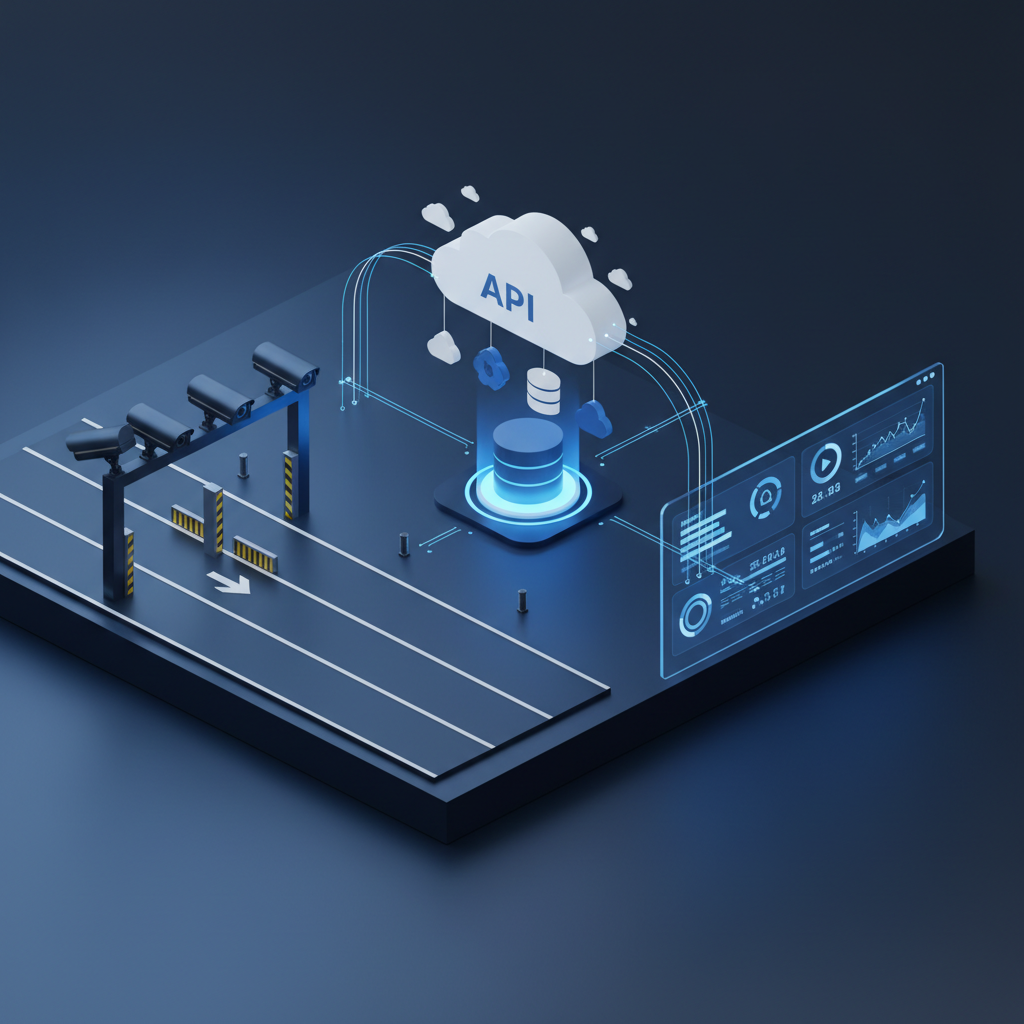
PLACA.AI builds custom license plate recognition software for teams that need more than a generic plate reader. We design high-speed LPR and ALPR workflows around your cameras, databases, business rules, alerts, and privacy requirements using in-house recognition libraries and workflow automation.
If your project needs a license plate recognition API, license plate recognition SDK-style integration, white label LPR software, or enterprise license plate recognition integration, this page explains the architecture, performance requirements, data model, privacy controls, and implementation path.
What Is Custom License Plate Recognition Software?
Custom license plate recognition software is an LPR or ALPR system built around a specific operational workflow. Instead of stopping at a plate read, the system connects the plate to the right record, action, alert, gate event, order, permit, customer, tenant, visitor, or enforcement task.
For enterprise teams, custom LPR software usually combines plate detection, OCR, confidence scoring, camera rules, API calls, dashboard workflows, data retention policies, and audit logs. The goal is not just recognition; the goal is a fast, accurate, privacy-aware process that produces daily customized leads, operational signals, or automated decisions.
Who Needs Custom LPR Software?
- Retailers that want curbside pickup arrival detection tied to customer orders.
- Parking operators that need permit checks, enforcement queues, payment matching, or towing workflows.
- Apartments, HOAs, and gated communities that need plate-based gate access and visitor rules.
- Self-storage facilities that need tenant vehicle access, temporary permissions, and audit logs.
- Schools that need vehicle verification, pickup-line accountability, and staff-controlled dismissal workflows.
- Security integrators and software companies that need white label LPR software or an embedded license plate recognition API.
Why Use In-House LPR Libraries Instead of Generic OCR?
Generic OCR reads text. Custom ALPR software has to solve a harder problem: moving vehicles, reflective plates, state-specific fonts, decorative frames, night glare, camera angle, partial occlusion, multi-lane motion, and strict timing requirements. PLACA.AI uses in-house LPR libraries so recognition can be tuned for the physical site and the business workflow.
In-house libraries also make it easier to optimize speed, confidence scoring, deployment controls, and error-handling logic. That matters when a plate read has to open a gate, alert an associate, validate a school pickup, or create an enforcement record in seconds.
Performance, Accuracy, and Speed Requirements
High-performing custom license plate recognition software should define performance before deployment. The project should specify acceptable read latency, confidence thresholds, missed-read handling, manual review workflows, lighting conditions, camera distance, vehicle speed, and the consequences of false positives or false negatives.
| Requirement | Why it matters | Implementation decision |
| Recognition speed | Controls whether the workflow feels instant | Edge processing, optimized inference, or cloud event pipeline |
| Accuracy threshold | Controls trust in automation | Confidence scoring, fallback review, and site-specific tuning |
| Camera coverage | Controls whether plates are readable | Camera placement, shutter, IR, lane geometry, and capture rules |
| Data retention | Controls privacy and compliance risk | Retention limits, deletion rules, and audit logs |
| Integration latency | Controls downstream workflow timing | API design, queueing, retries, and webhook alerts |
Custom LPR API, SDK, and Integration Options
A license plate recognition API can send plate reads into your existing software, while an SDK-style integration can embed LPR behavior deeper into a mobile app, gate platform, parking system, pickup workflow, or security dashboard. The right approach depends on how much control your team needs over camera input, recognition logic, user experience, and data storage.
- REST API: send images or events and receive plate text, confidence, timestamp, camera ID, and metadata.
- Webhook alerts: push matched plate events into your CRM, order system, gate controller, or staff queue.
- Dashboard integration: show plate reads, exceptions, approvals, and audit logs inside a custom workflow.
- White label LPR software: package PLACA.AI recognition and workflows under your company brand.
- Private deployment: isolate customer data, retention rules, and access controls for enterprise or regulated workflows.
Use Cases: Retail, Parking, Gates, Schools, Storage, Towing, HOAs
Custom LPR software works best when it is designed around a measurable workflow. The same recognition layer can support different actions: opening a gate, checking a parking permit, alerting a store associate, verifying a school pickup vehicle, logging a storage tenant visit, or routing a towing enforcement task.
| Use case | Custom workflow | Related PLACA.AI resource |
| Retail curbside pickup | Match arriving vehicles to orders and alert associates | Retail LPR privacy guide |
| Parking enforcement | Match plates to permits, payments, and violation rules | Parking enforcement with LPR |
| Gate access | Authorize entry by tenant, resident, visitor, or contractor plate | AI gate access control |
| Schools | Verify pickup vehicles and document dismissal accountability | LPR for school car lines |
| Self-storage | Automate tenant vehicle access and temporary permissions | Self-storage LPR gate access |
| Towing | Prioritize enforcement events and reduce manual patrol friction | Parking enforcement software for towing companies |
Build vs Buy vs White Label vs Custom LPR
The right LPR path depends on your product roadmap, budget, data requirements, and time to market. Building everything in house gives maximum control but requires camera expertise, recognition engineering, privacy design, and ongoing model maintenance. Buying generic software is faster, but may not fit your workflow. White label LPR and custom LPR software sit between those extremes.
| Approach | Best for | Tradeoff |
| Build in house | Teams with deep computer vision resources | Highest control, highest engineering cost |
| Off-the-shelf LPR | Simple plate lookup workflows | Fast start, limited customization |
| White label LPR software | Integrators and platforms that need branded LPR | Faster launch with less engineering burden |
| Custom LPR software | Enterprise workflows with unique rules and integrations | Best workflow fit, requires clear discovery and implementation plan |
For a deeper cost comparison, see Build vs Buy vs White Label LPR and the true cost of building LPR in house.
Custom LPR Software Requirements Checklist
- Define the operational workflow that the plate read should trigger.
- List all camera sources, locations, speeds, angles, and lighting conditions.
- Choose API, webhook, dashboard, or SDK-style integration patterns.
- Set recognition-speed, accuracy, and manual-review requirements.
- Define retention rules, access permissions, and audit logging.
- Plan fallback flows for missed reads, unreadable plates, duplicate plates, and unauthorized vehicles.
- Measure pilot success with latency, read rate, handoff time, false match rate, and staff workload metrics.
External reference: the National Institute of Justice has published policy and operational guidance for ALPR deployments, including governance and implementation considerations. See NIJ ALPR guidance.
Enterprise Retail Example: LPR Curbside Pickup Workflow
The current Walmart-style curbside pickup concept below is preserved as an example of how custom license plate recognition software can turn a generic plate read into an enterprise workflow: order matching, arrival alerts, associate tasks, privacy controls, and pilot success metrics.
Enterprise Retail Example Title
License Plate Recognition Curbside Pickup for Walmart
One line summary
Zero touch curbside pickup that links vehicle license plates to customer orders and alerts store associates the moment the shopper parks.
Executive summary
Retail curbside pickup is now a primary fulfillment channel. The final ten minutes of the journey often create friction at the stall. Placa.ai removes manual check in steps by matching the arriving vehicle plate to the order and pushing a ready to serve task to associates. The result is faster handoff, fewer misdeliveries, lower labor per order, and higher customer satisfaction. This document describes a conceptual integration for Walmart that can be adapted to other retailers. All integrations require retailer approval and use of retailer APIs or approved partner interfaces.
Business outcomes
- Reduce average curbside handoff time by 30 to 50 percent through automatic arrival detection.
- Cut manual check in workload for associates by 70 percent through background matching and work queue automation.
- Reduce stall dwell time and congestion through predictive staging and dynamic stall routing.
- Improve order accuracy by linking verified plate identity with order and parking stall.
- Increase repeat usage and NPS through a consistent drive up experience across stores.
Customer journey
- Customer places an order in the Walmart app or website and selects a pickup window and store location.
- During checkout or account settings, the customer optionally saves a license plate and vehicle description. Consent is recorded with clear language and a link to the privacy notice.
- Walmart notifies the customer when the order is ready.
- The customer drives to the store and parks in any designated pickup stall.
- A Placa.ai camera at each stall, or a mast camera covering multiple stalls, reads the plate and detects vehicle presence in real time.
- Placa.ai matches the plate to open ready for pickup orders for that window and store.
- The associate mobile app receives a task with stall number, order ID, and vehicle descriptors. If multiple orders are possible, the app prompts for a two factor confirmation such as the last name or order PIN.
- The associate brings the order to the vehicle and completes delivery in the Walmart associate app. Customer receives a completion notification and can rate the experience.
System architecture
- Edge capture. AI cameras or phone based capture kits read plates and detect occupancy. Coverage can be one camera per stall or multi stall coverage with zones. Solar powered options are available for quick deployment.
- Cloud orchestration. Placa.ai receives plate reads and stall events with timestamps. Plates are parsed, validated, and matched against the pickup order pool for the current store and window.
- Retail integration. Order and readiness status are obtained from retailer approved APIs or webhooks. Matching returns candidate orders and confidence scores. Delivery confirmation and exception events are pushed back to retailer systems.
- Associate experience. A lightweight web app or SDK surfaces tasks, routing, and confirmation flows on the existing associate devices. No new device is required.
- Analytics. Real time dashboards and daily reports track arrival to handoff time, first attempt success rate, re routes, and staffing efficiency.
Data model and matching logic
- Primary keys. Store ID, Stall ID, Order ID, Plate number including issuing state or country, Detection time.
- Matching tiers.
- Exact match. Plate and state match a single ready order. Auto create task and notify associates.
- Probable match. Plate matches multiple open orders or the state is missing. Prompt associate to verify with a single additional data point such as order initials or color make model.
- No match. Create a transient unmatched arrival and send a friendly SMS link to the customer to confirm the plate or stall. Associates can claim the arrival and attach to an order.
- Confidence signals. Repeated reads within a short window, vehicle color and type, historical arrival patterns, and geofence proximity improve the score.
- Time gates. Orders become eligible within the selected pickup window and remain eligible for a grace period configured per store.
Privacy and compliance by design
- Consent and transparency. Customers save a plate to their account only with explicit opt in and can remove or edit it at any time.
- Minimization. Only plates necessary for curbside matching are retained. Images are discarded or blurred after plate OCR depending on store policy.
- Security. Data in transit is encrypted with TLS. Data at rest is encrypted with AES. Access is role based with audit trails.
- Retention. Plate reads that do not match an order are purged within a short time window. Matched reads are retained for the minimum period required for customer support and fraud prevention.
- Policy alignment. Solution can be configured to meet Walmart privacy standards and applicable regulations.
Store operations and associate workflow
- Smart queue. Associates see a live queue of arrivals with stall numbers and order IDs sorted by readiness and wait time.
- Predictive staging. When an arrival is detected in the geofence before lot entry, the system can alert the back room to stage the order.
- Two factor delivery. For probable matches the app asks for a quick second factor such as the order PIN, initials, or the first item.
- Exceptions. Flat tire, wrong store, no show, or substitution required. The app guides associates through the right resolution path.
- Accessibility. Visual and voice prompts support ADA best practices. Multilingual UI including Arabic and Spanish is available.
Hardware options
- Fixed AI cameras per stall for the highest accuracy per stall mapping.
- Elevated multi stall cameras with zone mapping for lower cost per stall.
- Mobile app capture kit that uses an associate phone or a low cost device during peak periods.
- Solar and cellular kits for lots without convenient power and network.
Integration patterns
- Account level plate storage. The Walmart customer account stores a verified plate and vehicle description. Placa.ai uses a tokenized identifier. No direct access to customer PII is required.
- Order webhook. When an order becomes ready for pickup, Walmart posts an order ready event to Placa.ai with a tokenized customer ID and optional plate. Placa.ai activates matching for that order.
- Polling fallback. If webhooks are not available, Placa.ai polls approved endpoints for ready orders within the current window.
- Delivery confirmation. Placa.ai posts delivery confirmation and stall assignment back to Walmart systems with timestamps for SLA analytics.
Accuracy and performance
- Plate read accuracy in daylight can exceed 97 percent and at night above 95 percent with proper placement and infrared illumination. Actual results depend on stall layout and region.
- Read latency is typically under one second from capture to match.
- System uptime target is 99.9 percent with regional redundancy.
Security architecture
- Network isolation for edge devices with outbound only connections.
- Mutual TLS between edge and cloud.
- SSO for associate access using the retailer identity provider.
- Principle of least privilege with quarterly access reviews and continuous logging.
Analytics and KPIs
- Arrival to first contact time.
- Arrival to completion time.
- First attempt success rate.
- Percent of orders auto matched.
- Stall utilization and turnover.
- Labor minutes per order.
Implementation plan
- Discovery and design. Lot survey, camera plan, API alignment, and privacy review.
- Pilot at two to four stores. Deploy hardware, integrate webhooks, and train associates.
- Measure and tune. Optimize camera angles, matching thresholds, and staff routing.
- Rollout. Phased expansion across regions with a repeatable playbook.
Training and change management
- Associate training in thirty minutes or less with simple role based flows.
- On site champion per store and quick reference guides.
- Manager dashboard for staffing and SLA coaching.
Multilingual support
The customer and associate interfaces can run in English Arabic Spanish and other languages. Right to left layouts are supported. Notifications and receipts can be localized.
Edge cases
- Temporary plates or faded plates. Use make and color assist and prompt for one tap confirmation.
- Multiple orders in the same vehicle. The app bundles tasks and confirms both IDs.
- Customer borrowed a car. Send an SMS check in link tied to the order to attach a temporary plate for the visit.
- Wrong store arrival. The system detects the mismatch and offers a one tap guidance card.
Commercial model
- Software subscription per store with volume discounts.
- Hardware as a service options for cameras and solar kits.
- Optional professional services for lot design and integration.
Success criteria for pilot
- Arrival to first contact time reduced by at least 30 percent versus baseline.
- Auto match rate above 85 percent by week two of the pilot.
- Associate satisfaction score above 80 percent.
- Customer complaint rate reduced relative to baseline.
Disclaimers
This design describes a potential integration for Walmart and similar retailers. Any deployment requires retailer approval, security review, and signed data processing agreements. Walmart is a trademark of its owner. Placa.ai does not claim endorsement unless a written partnership agreement exists.
Call to action
Schedule a discovery session to evaluate your curbside lot and integration readiness. Placa.ai can deliver a rapid pilot in weeks using proven components and an API first approach.
Request a Custom LPR Software Consultation
Tell PLACA.AI what you want your LPR system to do: open a gate, validate a pickup, match a payment, alert staff, create an enforcement record, or connect plate reads to your private application. We will help scope a practical custom license plate recognition software pilot.
Frequently Asked Questions
What is custom license plate recognition software?
Custom license plate recognition software is an LPR or ALPR system designed around a specific workflow, camera environment, database, and business rule set instead of a generic one-size-fits-all deployment.
Can PLACA.AI build a license plate recognition API?
Yes. PLACA.AI can design LPR API workflows that receive images or video events, return plate reads and confidence data, and connect those reads to orders, tenants, permits, visitors, or enforcement records.
Is custom ALPR software faster than generic OCR?
It can be. Custom ALPR software can be tuned for plate-specific recognition, camera placement, confidence scoring, and workflow latency instead of treating plates like ordinary text.
Does custom LPR software require new hardware?
Not always. Many projects begin by validating existing IP cameras or RTSP streams. Purpose-built LPR cameras may be recommended for high-speed lanes, poor lighting, long capture distances, or strict accuracy requirements.
Can custom LPR software be privacy-first?
Yes. A privacy-first LPR design can limit retention, restrict staff permissions, separate plate events from customer data, and log every search or access event.
What is the best first step for a custom LPR project?
Start with a discovery session that maps the camera environment, data sources, workflow trigger, privacy requirements, integration endpoints, and success metrics for a pilot.
Can PLACA.AI support white label LPR software?
Yes. PLACA.AI can support white label LPR workflows for integrators, property platforms, and software companies that need plate recognition under their own brand.
Choosing an integration model? Use the license plate recognition API vs SDK guide to compare cloud, on-premise, edge, and hybrid enterprise architectures.
Internal Resources
- How Small Towing Companies Can Document Parking Violations With Mobile LPR Workflows
- How Hospitality Groups Can Reduce Guest Wait Time Complaints Using Ticketless Vehicle Recognition
- How Night Patrol Teams Can Replace Paper Patrol Logs With Mobile LPR Workflows
- LPR vs Keypads for Apartment Access Control
- The Complete Guide to License Plate Recognition Software for Small Businesses and HOAs (2025)