

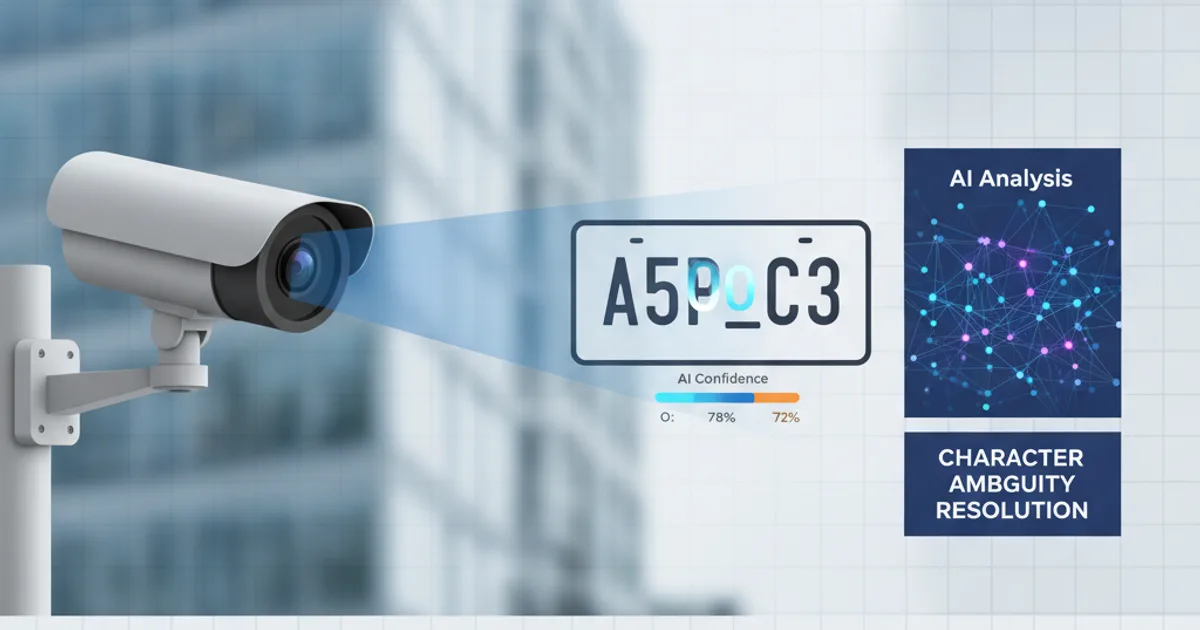
Can License Plate Readers Misread Plates? What HOAs Should Know About ALPR Accuracy
License plate reader accuracy is a board-level issue because a misread can affect access, visitor records, or enforcement review. HOAs should understand why errors happen and how to design workflows that catch uncertainty before it becomes a resident problem.
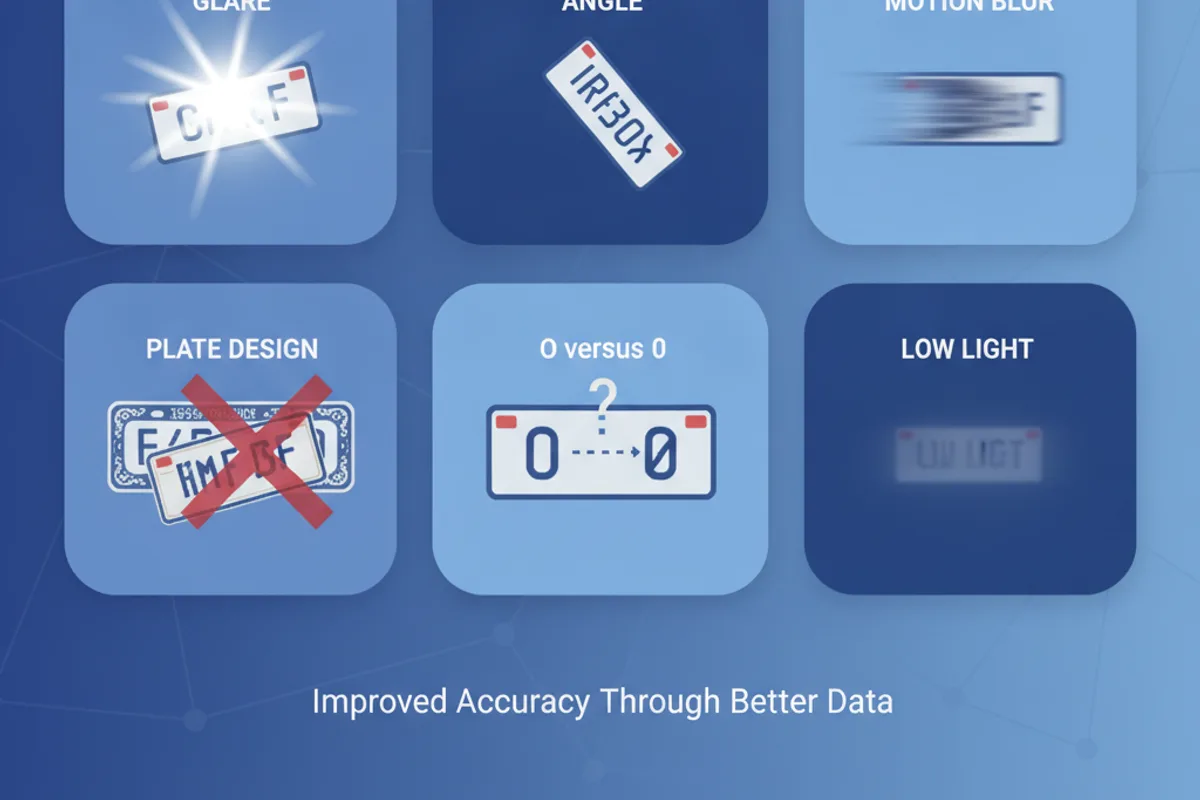
Short answer: Yes, license plate readers can misread plates. ALPR errors may happen because of glare, motion blur, low light, camera angle, dirty plates, plate frames, unusual fonts, or character ambiguity such as O versus 0. HOAs can reduce risk by using proper camera placement, confidence scoring, human review, audit logs, and clear correction workflows.
Key Takeaways
- HOA LPR should be designed around private-property workflows, not fear-based surveillance.
- Accuracy, privacy, retention, and audit logs should be board-level requirements.
- Resident and visitor workflows work best when vehicle records, confidence scoring, and human review are connected.
- Placa.ai is positioned as a practical, privacy-conscious cloud AI LPR platform for HOAs and other private-property operators.
Why License Plate Readers Can Misread Plates
Direct answer: ALPR systems interpret images, and image quality is affected by real-world conditions.
The common error factors
Glare can wash out characters. Low light can reduce contrast. Motion blur can smear letters. Camera angle can distort the plate. Plate frames, dirt, damage, temporary tags, decorative backgrounds, and unusual state designs can make recognition harder. Character confusion is another issue: O can look like 0, B can look like 8, S can look like 5, and I can look like 1.
These issues do not mean LPR is unusable. They mean an HOA should treat accuracy as a workflow with safeguards.
O Versus 0: Why a Small Error Can Matter
Direct answer: A single character can change whether a plate matches a resident or visitor record.
Do not build policy around perfect reads
If a community treats every plate read as certain, a simple O versus 0 issue can create confusion. A resident vehicle might appear unknown. A visitor might be linked to the wrong record. An enforcement review might start from the wrong assumption. The better approach is to show the original image, the interpreted text, the confidence score, and the match logic so an authorized person can review the event when needed.
The companion article on HOA LPR accuracy checks explains how to structure that review.
How Confidence Scoring Helps
Direct answer: Confidence scoring helps administrators understand whether the software is certain, uncertain, or needs review.
Use confidence to route decisions
A high-confidence match to an approved resident vehicle may support automated gate access. A low-confidence unknown vehicle may need manual review. An event tied to a fine, tow, access denial, or resident complaint should usually have a higher review standard. Confidence scoring is valuable because it helps the system avoid treating all reads the same.
For HOA boards, the key question is not whether the vendor claims high accuracy. The key question is how the platform behaves when accuracy is uncertain.
How HOAs Can Improve ALPR Accuracy
Direct answer: The best accuracy improvements usually come from camera setup, operating rules, and clean data.
Start with placement and registration
Camera placement should match lane speed, plate angle, lighting, and expected vehicle flow. Resident vehicle registration should be kept current, with a clear process for rental cars, temporary vehicles, caregivers, contractors, and new residents. Staff should know when to trust automation, when to review, and when to escalate an exception.
The board guide to HOA license plate cameras includes pre-installation questions that support this planning.
Privacy and Accuracy Belong Together
Direct answer: A privacy-conscious LPR system should not keep or expose more data than the HOA needs.
Bad data should not become long-term data
Retention settings, correction workflows, and audit logs help prevent inaccurate events from creating long-term friction. Administrators should be able to document why they reviewed a record, what action was taken, and whether the plate text or vehicle record was corrected. Residents should have a clear way to update their vehicle registration and ask questions about the policy.
This is a practical, resident-centered way to use technology without fear-based surveillance language.
Board Governance and Resident Communication
Direct answer: HOA boards should treat LPR as a governed operating system, not just a camera purchase. The board should document the approved purpose, who can administer records, when manual review is required, how long data is retained, and how residents can update vehicle information or ask questions.
Make the policy easy to explain
A clear resident notice should say where cameras are used, what vehicle data is collected, why the association collects it, who can access it, and what safeguards are in place. It should also explain that LPR supports community access and operational review, not unlimited monitoring. This kind of plain-language communication helps property managers answer questions consistently and gives residents a practical path for correcting plate records, adding temporary vehicles, or understanding visitor access rules.
Boards should also review the workflow after launch. Early reviews can reveal camera placement issues, registration gaps, confusing visitor rules, or staff training needs. A short monthly review of low-confidence reads, manual overrides, resident support requests, and administrator searches can improve the system without changing the community’s broader structure or archive behavior.
Ways to Reduce ALPR Misreads
- Use camera placement designed for the actual lane and vehicle speed.
- Avoid relying on poor lighting or extreme camera angles.
- Review low-confidence reads before acting on them.
- Keep resident vehicle registration records current.
- Document corrections and administrator review actions.
- Use retention settings so old uncertain records do not linger unnecessarily.
Suggested Internal Resources
- HOA license plate recognition camera – Placa.ai’s main HOA LPR resource.
- Access control – broader vehicle and gate access automation guidance.
- Cloud access audit logs – why administrator accountability matters.
- Contact Placa.ai – talk through your community entrance, gate, or vehicle access workflow.
Related HOA LPR Cluster Articles
- HOA license plate recognition accuracy checks – how confidence scoring and review workflows reduce risk
- HOA license plate cameras – what boards should decide before installation
- Flock Safety alternatives for HOAs – how to compare private community LPR systems
FAQ
Can license plate readers misread plates?
Yes. License plate readers can misread plates because of glare, angle, motion blur, low light, plate design, dirt, plate frames, or similar-looking characters.
What is an O vs 0 license plate reader error?
It is a character confusion error where the system interprets the letter O as the number 0, or the number 0 as the letter O.
Does Placa.ai claim 100% accuracy?
No. Responsible LPR deployments should avoid 100% accuracy claims and should use review workflows for uncertain or high-impact events.
How can an HOA reduce false plate reads?
An HOA can improve camera placement, lighting, vehicle registration data, confidence scoring, human review, and exception handling.
Should misreads stop an HOA from using LPR?
Not necessarily. Misreads mean the HOA should design safeguards and review workflows instead of treating every read as final.
Can accuracy workflows protect privacy?
Yes. Review, correction, access controls, and retention settings help reduce unnecessary disputes and limit bad data exposure.
Conclusion: Build a System the Board Can Explain
HOA license plate recognition works best when the board can explain the purpose, the data controls, the accuracy review process, and the resident support path. Placa.ai helps communities think through LPR as an operating workflow: vehicles, visitors, access decisions, review, retention, and auditability. If your community is evaluating HOA LPR cameras, gate access, or a private community LPR system, start with the policy and workflow before buying hardware.
Request a Placa.ai HOA LPR consultation to review your entrance layout, resident vehicle process, visitor access needs, and privacy requirements.
Internal Resources
Data source: Community Associations Institute