

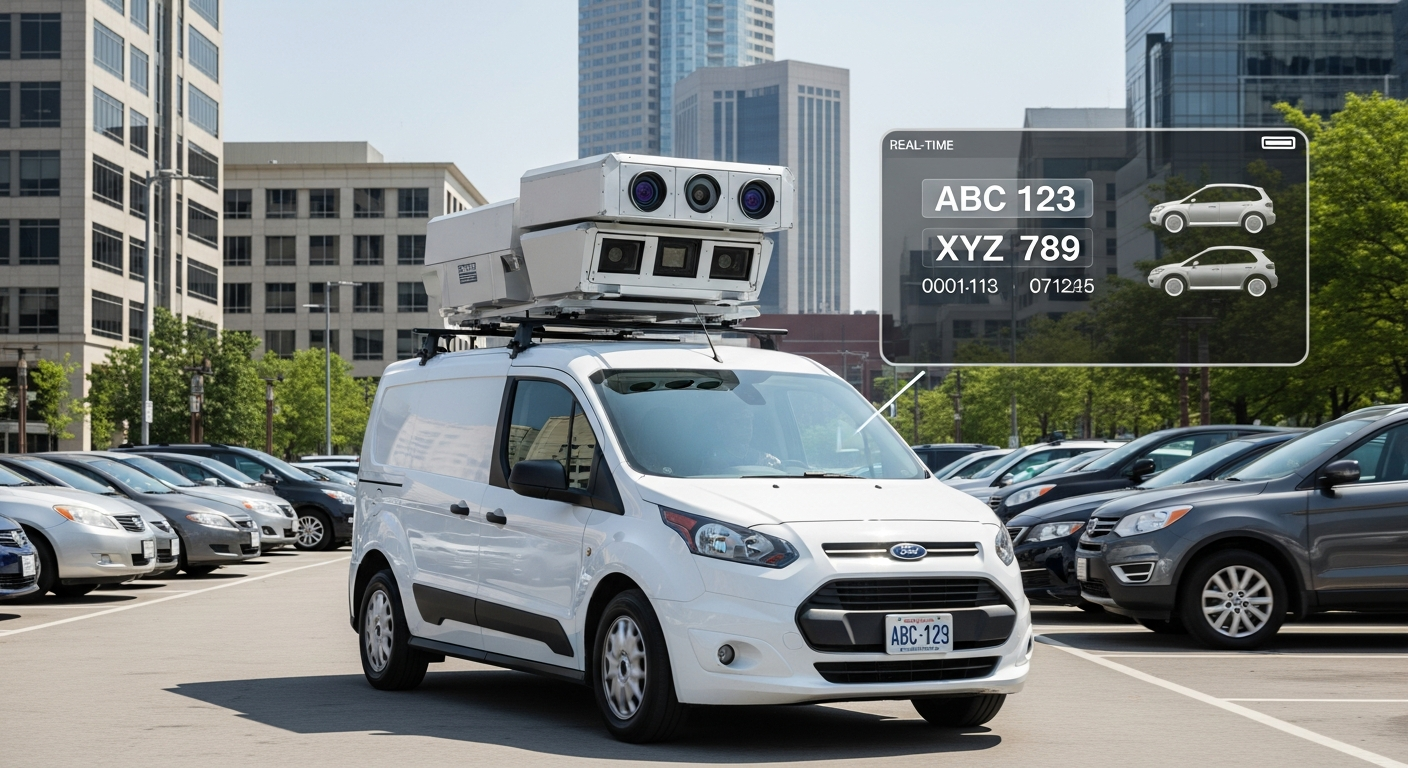
LPR camera parking enforcement
LPR Camera Systems for Parking Enforcement
A practical guide from Placa for buyers comparing camera placement, LPR workflows, and private-property vehicle recognition options.
Why This Matters
License plate recognition is rarely solved by buying a camera at random. The camera must see the plate clearly, at the right angle, in the right lighting, at the expected speed. Then the software must turn that read into a useful vehicle event: a searchable log, access decision, alert, report, or evidence record.
Capture First
Check lane geometry, mounting height, distance, approach angle, glare, and whether cars stop, crawl, or pass at speed.
Workflow Second
Decide what should happen after a plate is read: open a gate, flag a vehicle, search history, notify staff, or document a parking event.
Recommendation Last
Only after those conditions are known should a camera tier be selected.
What to Compare
- Lane count and whether each lane needs its own capture zone.
- Vehicle speed and whether radar-assisted or radar-triggered capture is useful.
- Night performance, IR behavior, and headlight glare.
- Power and network access, including cellular and wireless options.
- Gate controller or parking workflow integration.
- Privacy policy, retention rules, user permissions, and search access.
How Placa Helps
Placa is a cloud AI LPR platform, not a generic camera storefront. The goal is to match the camera to the site, connect the camera to cloud LPR workflows, and help teams use the resulting vehicle events for safer, cleaner operations.
Related Placa Resource
Related Placa Resource
Camera Recommendation
Related Placa Resource
Related Placa Resource
Image Recommendations
Hero image: realistic private-property entrance with a visible LPR camera and subtle Placa dashboard overlay. Diagram: camera angle, capture zone, plate read event, and cloud dashboard. AI prompt: Create a clean modern SaaS-style image showing a private-property entrance with vehicles entering, an LPR camera mounted near the lane, subtle plate recognition overlay, and a Placa cloud dashboard UI. No police, no citations, no third-party logos.
FAQ
What should I know about LPR camera systems parking enforcement?
LPR Camera Systems for Parking Enforcement should be evaluated around plate capture conditions, camera placement, lighting, vehicle speed, lane count, and how the result connects to Placa cloud LPR workflows.
Is software or hardware more important?
Both matter. Software organizes plate events, search, alerts, and permissions, but the camera still needs a usable view of the plate.
What should the next step be?
The next step is a site assessment that reviews entrance geometry, speed, lighting, power, network access, and gate or parking workflow needs.
See Which Camera Fits Your Site
Share your entrance layout, speed, lane count, and current gate or parking workflow.
Source: U.S. Department of Transportation
Source: U.S. Department of Transportation
LPR Cameras for Parking Enforcement
LPR camera parking enforcement automates the process of identifying unauthorized vehicles in restricted lots, time-limited spaces, and permit-required parking areas. Cameras read plates continuously and flag vehicles that do not match an approved permit or exceed their time limit.
How do LPR cameras enforce time-limited parking?
Cameras log the first capture time for each plate in a monitored zone. If the same plate remains beyond the allowed duration-30 minutes, 2 hours, or any defined window-the system flags it for enforcement action. Staff receive automated alerts rather than needing to manually walk the lot and chalk tires.
Can LPR parking enforcement distinguish between permit holders and visitors?
Yes. The system maintains a permit database. When a plate is captured, it is cross-referenced against the permit list. Permit holders are automatically cleared. Non-permit plates are flagged. Temporary visitor passes can be added to the system by authorized staff through a mobile app, preventing false enforcement of legitimate short-term visitors.
How does LPR reduce parking enforcement labor costs?
Traditional enforcement requires staff to walk the lot, check plates manually or against a clipboard list, and issue notices on foot. LPR automates the identification step. A single operator monitoring the software dashboard can manage enforcement across multiple lots simultaneously, with alerts only requiring attention when a violation is confirmed.
What evidence does LPR provide for parking violation disputes?
Each violation capture includes a timestamped plate image, GPS coordinates if mobile cameras are used, and a structured data record. This evidence is stored in the system and retrievable for any dispute. Photographic evidence significantly reduces successful appeals compared to manually-written violation notices.
LPR camera parking enforcement delivers more consistent, cost-efficient, and defensible violation management than traditional manual patrol methods for parking operations of any scale.
About Placa.ai
Placa.ai is a license plate recognition platform designed for property managers, HOA boards, school administrators, and parking operators who need reliable vehicle identification without enterprise-level complexity. The system pairs high-accuracy LPR cameras with cloud software that delivers real-time alerts, access logs, and direct integration with gate control systems.
Communities and facilities using Placa.ai gain automated vehicle identification that works around the clock. Setup typically takes one to two hours per camera, and the management dashboard is ready immediately after camera enrollment. All plate data is encrypted in transit and at rest, stored in compliance with applicable data protection standards, and accessible through the web portal or mobile app.
Placa.ai serves residential communities, commercial parking facilities, self-storage operators, K-12 schools, and private road associations across the United States. The platform scales from single-camera residential installations to multi-site enterprise deployments with centralized management.
To learn more or schedule a demo, visit placa.ai.
Organizations evaluating LPR technology for their property or facility can request a site assessment from Placa.ai. Our team reviews approach geometry, lighting conditions, and gate hardware to recommend the camera model and mounting configuration best suited to each location. Deployments typically begin within one to two weeks of hardware selection.
Related planning resources: YNOT Towing alternative for LPR enforcement and visit PLACA.AI at TowXpo 2025.