

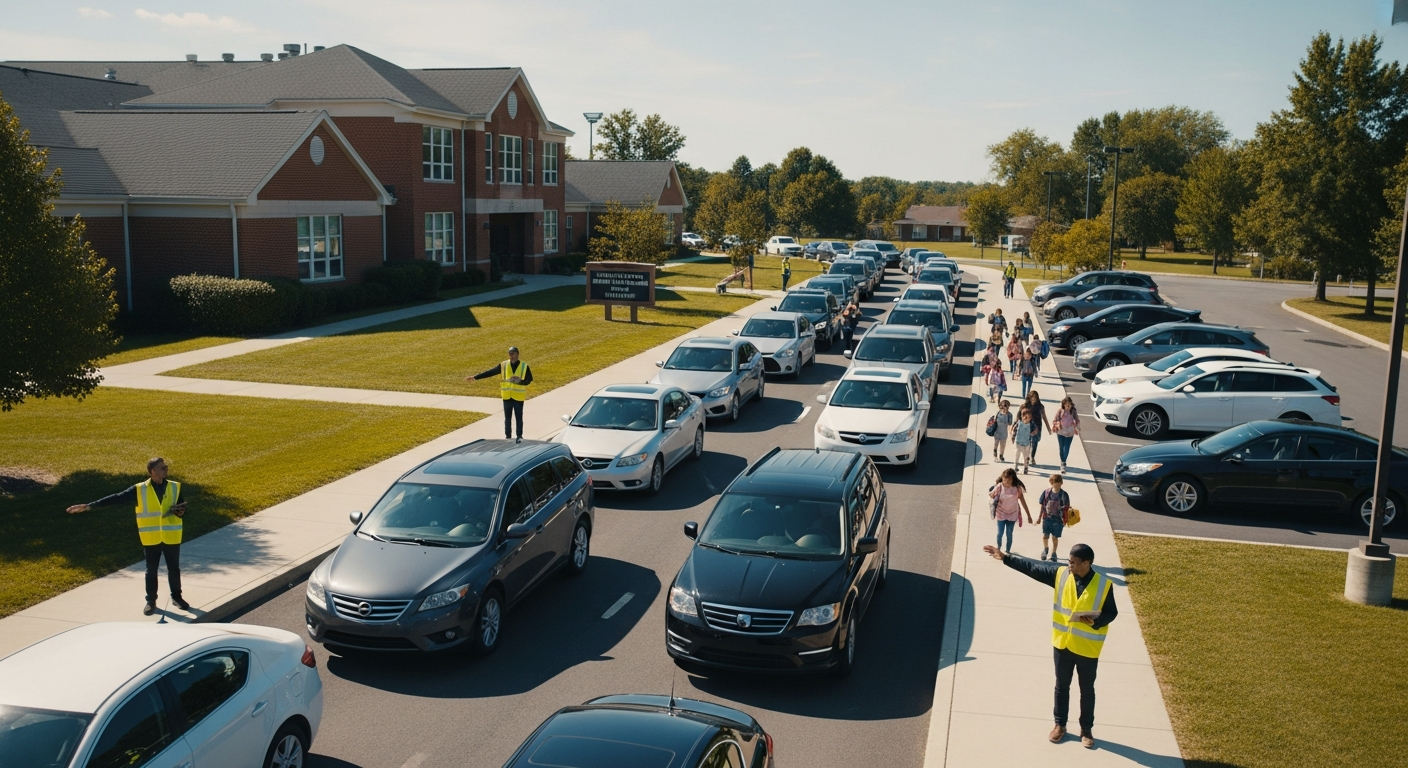
elementary school pickup line best practices
Elementary school pickup lines face unique challenges: very young students, high parent anxiety, frequent grandparent and carpool situations, and the strictest safety requirements of any grade level.
Best Practices for Elementary School Pickup Lines
Elementary school dismissal is where pickup line safety matters most. Kindergarteners and first graders cannot advocate for themselves if something goes wrong. Staff must know exactly who is authorized – every day, for every student.
1. Require Explicit Authorization for Every Pickup Person
At the elementary level, every person authorized to pick up a student should be registered – not just the primary parent. This includes grandparents, aunts and uncles, neighbors, babysitters, and carpool partners. A student pickup line app lets parents manage this list digitally with automatic expiration for temporary permissions.
2. Stage Students Before the Car Reaches the Curb
Waiting until the car reaches the front of the line to locate and call a young student is the biggest time waster in elementary pickup. With pre-notification, staff calls the student when the vehicle is still two or three cars back. The student is at the exit point when the car arrives.
3. Offer QR Code Options for Non-Standard Pickup Situations
Elementary parents are most likely to send grandparents, babysitters, and family friends. A QR code pickup option makes these situations manageable – the parent sends the authorized person with a QR code on their phone, and the authorization check is automatic.
4. Document Every Pickup Event
Elementary schools see the most custody disputes and unauthorized pickup concerns. A full pickup audit trail with timestamps and vehicle records is not a nice-to-have at this grade level – it’s essential for your school’s ability to respond to any incident.
5. Create a Pilot-First Culture
If your elementary school has never used a digital dismissal system, a one-grade pilot starting with kindergarten or first grade is the ideal entry point. These grades have the most engaged parents and the most complex pickup authorization situations.
6. Staff Must Approve Every Release – No Exceptions
At the elementary level, this is non-negotiable. No student should ever be sent to a vehicle without a staff member actively confirming the authorization and logging the approval. Placa requires this for every dismissal.
Get the school pickup safety checklist and pilot guide
Data reference: National Center for Education Statistics
Related planning resource: one-lane pickup pilot for testing new technology.
Related planning resource: school pickup line accountability with LPR.
Related planning resource: authorized vehicle checks in elementary pickup lines.
Related planning resources: school pickup safety checklist, why pickup lines are slow and reduce parent pickup complaints.
Related Elementary School Pickup Resources
Additional guides for elementary pickup, car rider dismissal, carline automation, and parent pickup workflows.
- School Pickup Line Software
- School Car Line Software for Elementary and Middle School Dismissal
- Parent Pickup App for Schools vs Vehicle Recognition
- Carline Automation Software
- School Dismissal Management System
- School Car Rider Dismissal Software for Safer Afternoon Pickup
- QR code school pickup system for privacy-conscious families
- authorized student pickup software concepts