

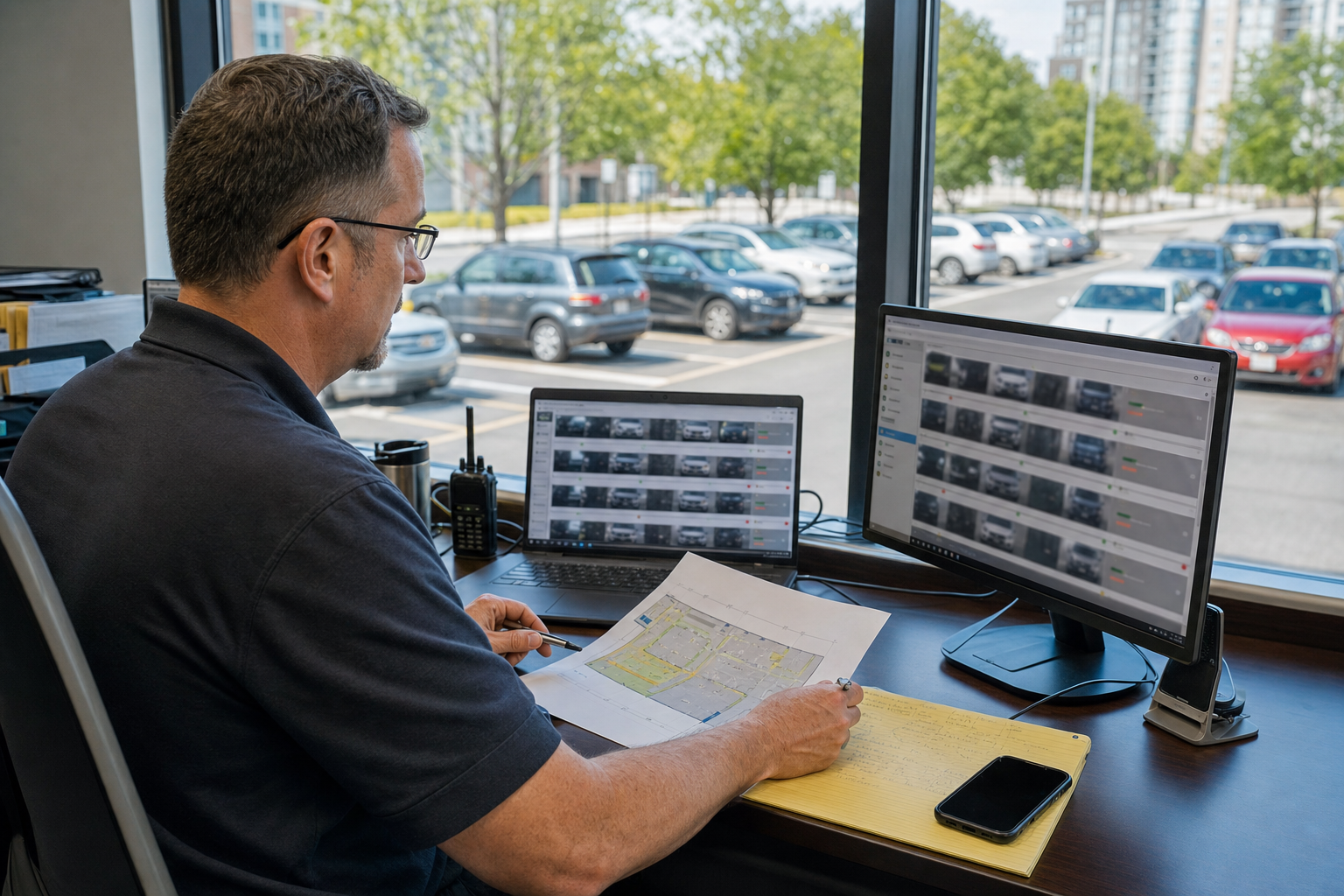
An LPR exception queue should catch uncertain plate events before enforcement. Route low-confidence reads, conflicting permit or payment records, unclear photos, repeat disputes, and severe consequences to human review, then document the decision before issuing a citation, tow request, payment notice, or access denial.
Key Takeaways
- A plate read should not become enforcement automatically when the image, account match, or consequence is uncertain.
- The review queue should separate clean matches from low-confidence reads, stale permits, delayed payment sessions, and unclear vehicle evidence.
- Fresh parking-industry guidance from July 2026 emphasizes that missed reads happen and that secondary checks reduce disputes.
- Human review is most important when the action is hard to reverse, such as towing, booting, account penalties, or access denial.
- Privacy, retention, and audit rules need to be written into the workflow, not added after complaints arrive.
What This Workflow Involves
This workflow is a pre-action review step between the camera event and the enforcement decision. The system captures the plate image, OCR result, confidence level, location, time, lane or lot, and any matching permit, payment, resident, visitor, or vehicle record. The review rule then decides whether the event is clear enough for normal processing or needs a staff member to check the evidence.
A good queue does not send every scan to a person. It sends the right exceptions: blurry images, partial plates, common character substitutions, one-plate-state conflicts, rental or temporary plates, recent account changes, payment sessions that may not have synchronized, and vehicles that trigger a severe response. The goal is to reduce disputes without turning the operation back into a clipboard process.
For operators using PLACA.AI, the practical question is how the plate event moves through policy, evidence, and staff judgment. The scan can start the record, but the workflow should show why the final decision was fair and reviewable.
Why This Problem Is Showing Up Now
Public discussion around campus and private parking systems is increasingly focused on whether plate-based enforcement still has a manual check before someone receives a ticket or fee. A recent Virginia Tech parking discussion included concern about virtual permits and vehicle-mounted readers, with the practical question of whether a citation officer still verifies a flagged vehicle.
At the same time, a July 9, 2026 parking-industry explainer from PAVE Mobility on missed parking LPR reads lists real-world causes such as camera angle, glare, dirty plates, motion blur, weather, plate design, camera placement, and OCR limitations. The useful takeaway for operators is not that LPR is unreliable. It is that a system should fail gracefully when conditions are not clean.
Official parking programs show why this matters operationally. The University of Michigan’s LPR parking FAQ explains that virtual permits depend on a registered license plate and that vehicles need to park so the plate faces the drive lane. During its 2025-2026 transition, some gated areas still rely on existing access devices until lane equipment is upgraded. That kind of transition creates exactly the edge cases a review workflow should catch.
The Core Operational Problem
The core problem is not the camera. It is the handoff from machine output to human consequence. A clean read linked to an active permit is routine. A weak read linked to a penalty is different. If the operation cannot show what evidence was reviewed before action, the driver or resident experiences the system as arbitrary.
Disputes usually form around a few recurring questions: Was that actually my plate? Did the payment session sync before the patrol scan? Was the permit recently updated? Did the camera see the front novelty plate instead of the legal rear plate? Did a staff member compare vehicle make, color, state, and image before escalating?
That is where workflow design matters. PLACA.AI’s LPR and QR auto-pay workflows for parking operators should be judged by how clearly they handle uncertain events, not only by how many plates they can read.
Evidence Context
The August 2025 AAMVA License Plate Reader Program Best Practices Guide notes that tolling and parking authorities rely on LPR technology and that misreads can affect revenue collection. It also identifies technical limitations such as weather, lighting, obstructions, and plate standards, and it emphasizes policies for data retention, dissemination, security, audits, and training.
Those best-practice ideas apply differently in a private parking lot than in a law-enforcement program, but the operating principle carries over: define the rules before collection, train the users, audit the system, and avoid using a plate event beyond the authority and purpose the operator can explain.
LPR Exception Queue Checklist
| Queue trigger | Reviewer checks | Likely action |
|---|---|---|
| Low confidence or partial read | Plate image, alternate frame, state, make, model, color, similar characters | Clear, correct, warn, or request another observation |
| Permit or payment mismatch | Account update time, payment sync, grace period, zone, license plate entry typo | Hold enforcement until the system record is reconciled |
| Severe consequence | Tow rule, boot rule, access denial, repeat history, manager approval | Require human approval before action |
| Unclear site context | Signage, stall, lane, event restriction, temporary closure, visitor rule | Ask for a site photo or supervisor review |
| Privacy-sensitive use | Purpose, retention period, access role, sharing rule, audit trail | Limit use to the stated operational purpose |
Confidence Bands And Actions
Use confidence bands to keep the queue practical. A high-confidence match with a current permit or paid session can move through ordinary processing. A medium-confidence read with matching vehicle attributes may be eligible for a warning or second observation, depending on the policy. A low-confidence read should not trigger a penalty without more evidence.
The action should also match the consequence. A soft reminder for a resident to update a plate can tolerate more uncertainty than a tow request. A gate denial during staffed hours may allow immediate help; an after-hours denial can strand someone. A mailed fee notice may be reversible, but it still creates support cost and trust damage if the evidence is weak.
Privacy, Fairness, And Limits
Do not store every plate event forever just because the system can. Decide retention by purpose: active permit enforcement, payment reconciliation, dispute review, safety investigation, or audit. Limit who can search plate history, define when exports are allowed, and record when staff override the automated result.
Fairness also means designing for ordinary exceptions. People drive rental cars, borrow family vehicles, mistype plates, replace plates, use temporary tags, park during events, and pay in systems that may not update instantly. The review workflow should make those cases visible before the operator imposes the most severe consequence.
Finally, do not promise perfect accuracy. A more credible promise is narrower: the system captures evidence, flags uncertainty, routes exceptions to review, and gives the team a defensible record when a driver asks what happened.
Worked Example: Paid Session With A Weak Plate Read
A downtown private lot uses LPR at the entrance and QR payment in the stall area. At 8:05 p.m., a patrol event shows a vehicle with no paid session. The OCR result has one uncertain character, and the payment platform shows a session opened at 8:03 p.m. for a plate that differs by one character.
Without a review queue, the operator may issue a fee or send the case to enforcement. With a better workflow, the event goes to exception review because three signals conflict: low OCR confidence, near-match payment, and short timing gap. The reviewer compares the image, payment timestamp, plate state, and common character substitution. If the evidence supports a customer typo, the team can correct the record or send a polite plate-update notice instead of a penalty.
The same workflow can escalate when the evidence is stronger. If the plate is clear, no payment exists after the grace period, the vehicle has repeat unpaid sessions, and the signage is documented, the operator has a cleaner record for enforcement and a clearer answer if the driver disputes it.
Frequently Asked Questions
When should a plate read go to human review?
Send it to review when the image is unclear, the confidence score is low, the permit or payment record conflicts, the vehicle attributes do not match, the account was recently changed, or the outcome could lead to towing, booting, access denial, or a formal citation.
Does human review mean every parking scan needs manual approval?
No. The queue should filter exceptions, not routine matches. Clean reads connected to valid permits or paid sessions can move normally, while uncertain events receive more evidence before action.
What evidence should be visible in the review screen?
The reviewer should see the plate image, OCR result, confidence signal, location, timestamp, vehicle attributes, permit or payment match, recent account changes, applicable rule, grace period, and prior dispute notes when policy allows.
How does this reduce driver or resident complaints?
It catches preventable errors before they become penalties, and it gives support staff a clear explanation when a driver asks why the system flagged the vehicle.
Can this workflow apply to HOAs or gated communities?
Yes, but the policy should be narrower. HOA and apartment teams should define registration corrections, guest rules, privacy notices, retention, and manager overrides before using plate reads for access or enforcement.
Related PLACA Resources
- Start with LPR and QR auto-pay workflows for parking operators when reviewing payment, permit, and enforcement handoffs.
- Use parking enforcement software for towing companies when the exception can lead to patrol dispatch, booting, or towing.
- Compare deployment choices in the LPR camera and software comparison guide before changing hardware, software, or review rules.
Next Step
Pull the last 20 disputed plate-based cases and label the failure point: image quality, OCR confidence, payment sync, permit data, signage, staff review, communication, or policy. The pattern will show whether the fix is better camera placement, cleaner data, clearer rules, or a tighter review queue.
Internal Resources
- Virtual Permit LPR Rollout Checklist for Campus Parking
- Registered Owner Parking Notice Workflow for LPR Lots
- How Event Valet Companies Can Coordinate Valet Staffing On Busy Nights Using Ticketless Vehicle Recognition
- How Event Lot Managers Can Improve Self-Parking Compliance Without Adding More Hardware
- How Hotel Valet Teams Can Document Vehicle Condition Issues Using Ticketless Vehicle Recognition