
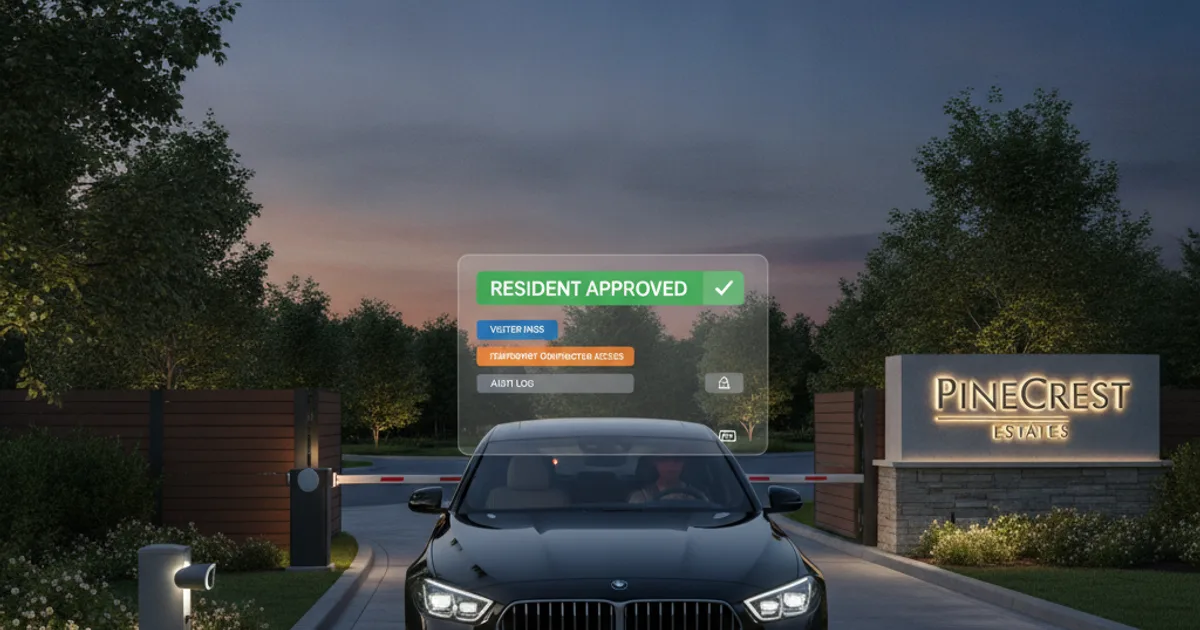
HOA Gate Access with License Plate Recognition: A Smarter Way to Manage Residents and Visitors
Gate access is one of the clearest HOA use cases for license plate recognition. Residents want convenient entry, property managers want cleaner records, and boards want a system that is explainable. LPR can help when it is deployed as an access workflow, not a fear-based surveillance program.
Short answer: HOA gate access with license plate recognition uses a vehicle plate as one credential in the access workflow. The system can match a plate to a resident, visitor, contractor, or temporary pass, then log the gate event for authorized review. The strongest deployments include manual override, confidence scoring, retention settings, and audit logs.
Key Takeaways
- HOA LPR should be designed around private-property workflows, not fear-based surveillance.
- Accuracy, privacy, retention, and audit logs should be board-level requirements.
- Resident and visitor workflows work best when vehicle records, confidence scoring, and human review are connected.
- Placa.ai is positioned as a practical, privacy-conscious cloud AI LPR platform for HOAs and other private-property operators.
How HOA Gate Access LPR Works
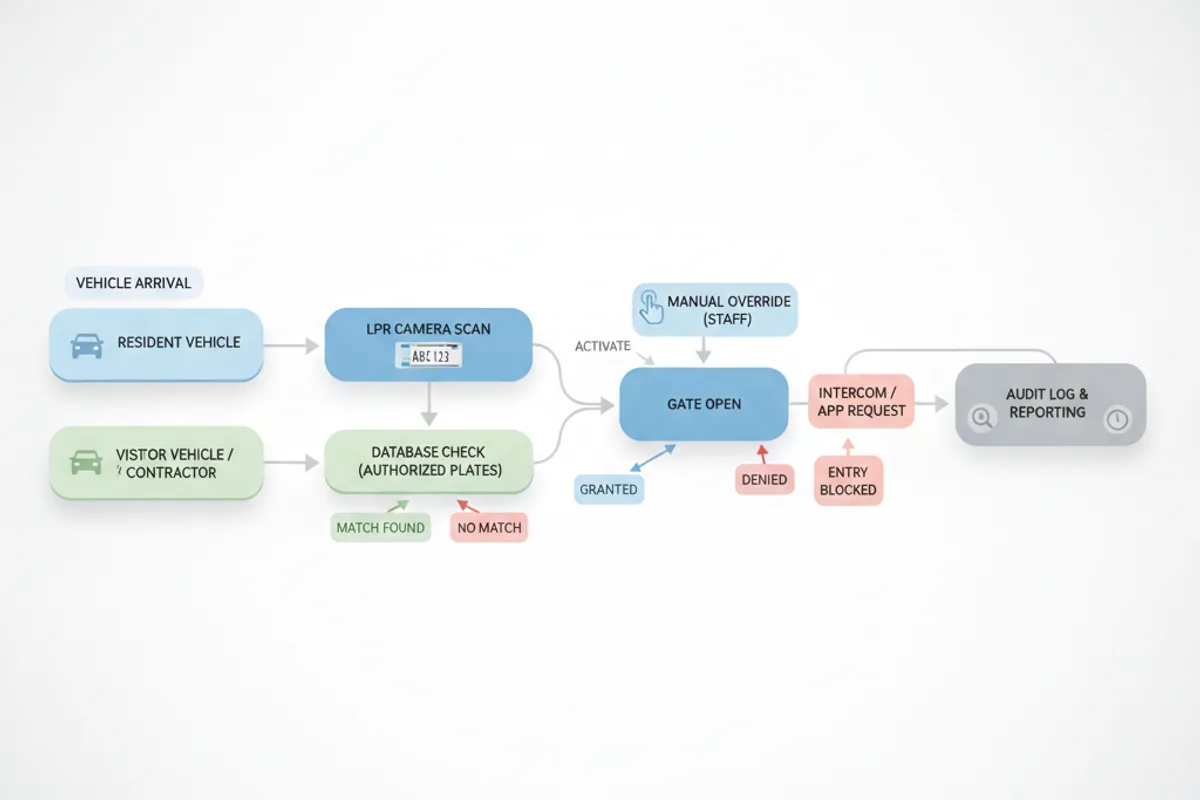
Direct answer: The camera captures a plate as the vehicle approaches the gate, and software checks whether that plate is authorized for the community.
One credential in a broader workflow
A resident’s approved vehicle may open the gate automatically if the read is high confidence and the vehicle record is active. A visitor plate may match a temporary pass. A contractor plate may be approved only during certain hours. Unknown vehicles may route to staff review, intercom, guard desk, or manual override depending on community policy.
Placa.ai’s HOA gate access control resource covers related entrance automation options.
Resident Vehicle Registration
Direct answer: Resident vehicle registration is the data foundation for HOA gate access LPR.
Keep records current
The association should define who can add vehicles, how residents update plates, how rental cars are handled, how expired vehicles are removed, and how multiple household vehicles are managed. Without clean records, even a strong camera can create unnecessary support tickets. With clean records, staff can understand why a vehicle was approved, denied, or sent for review.
For broader resident workflows, see Placa.ai’s resident solutions page.
Visitor and Contractor Access
Direct answer: Visitor access should be flexible enough for real community life.
Temporary passes and exceptions matter
HOAs need a plan for guests, caregivers, contractors, delivery vehicles, moving trucks, cleaning services, dog walkers, and special events. License plate recognition can help connect those vehicles to a temporary pass or approved window. The workflow should also allow staff to override or correct an event when the plate read is uncertain or the resident forgot to register the visitor.
Placa.ai’s cloud visitor management resource is a useful companion for visitor access planning.
Accuracy Checks at the Gate
Direct answer: Gate access is operationally sensitive because a bad read can block a legitimate vehicle.
Use confidence-aware decisions
The HOA can decide which events are eligible for automation and which require review. A high-confidence resident match may open the gate. A low-confidence read can route to manual review or an alternate access method. The system should preserve the image, interpreted plate, confidence status, and action taken so staff can resolve questions later.
The cluster articles on HOA license plate recognition accuracy checks and license plate reader accuracy explain why this matters.
Privacy and Audit Logs for Gate Events
Direct answer: Gate access records should be useful without becoming open-ended monitoring.
Define retention before launch
Boards should define why gate events are retained, how long they are kept, who can search them, and when records may be exported. Audit logs should show administrator access and changes. Residents should know that the system is focused on entrance access, visitor workflows, and incident review rather than broad tracking.
A privacy-conscious gate workflow gives the board better operational records while keeping governance at the HOA level.
Board Governance and Resident Communication
Direct answer: HOA boards should treat LPR as a governed operating system, not just a camera purchase. The board should document the approved purpose, who can administer records, when manual review is required, how long data is retained, and how residents can update vehicle information or ask questions.
Make the policy easy to explain
A clear resident notice should say where cameras are used, what vehicle data is collected, why the association collects it, who can access it, and what safeguards are in place. It should also explain that LPR supports community access and operational review, not unlimited monitoring. This kind of plain-language communication helps property managers answer questions consistently and gives residents a practical path for correcting plate records, adding temporary vehicles, or understanding visitor access rules.
Boards should also review the workflow after launch. Early reviews can reveal camera placement issues, registration gaps, confusing visitor rules, or staff training needs. A short monthly review of low-confidence reads, manual overrides, resident support requests, and administrator searches can improve the system without changing the community’s broader structure or archive behavior.
HOA Gate Access LPR Rollout Checklist
- Confirm the gate use case and entry lanes before selecting cameras.
- Clean resident vehicle registration records before launch.
- Define visitor, vendor, contractor, and temporary vehicle rules.
- Set manual override and alternate access procedures.
- Use confidence scoring for uncertain plate reads.
- Log gate actions and administrator review.
- Publish retention, access, and resident support policy.
Suggested Internal Resources
- HOA license plate recognition camera – Placa.ai’s main HOA LPR resource.
- Access control – broader vehicle and gate access automation guidance.
- Cloud access audit logs – why administrator accountability matters.
- Contact Placa.ai – talk through your community entrance, gate, or vehicle access workflow.
Related HOA LPR Cluster Articles
- HOA license plate recognition accuracy checks – how confidence scoring and review workflows reduce risk
- HOA license plate cameras – what boards should decide before installation
- Flock Safety alternative for HOAs – how to compare private community LPR systems
FAQ
Can LPR be used for HOA gate access?
Yes. LPR can be used as part of an HOA gate access workflow when plates are matched to approved resident, visitor, contractor, or temporary access records.
Does LPR replace every gate credential?
Not always. Many communities use LPR alongside clickers, keypads, intercoms, guard review, or manual override procedures.
How are visitors handled with HOA gate access LPR?
Visitors can be tied to temporary passes, resident approvals, time windows, or manual review depending on the community’s policy and software workflow.
What happens if the camera misreads a resident plate?
The system should route uncertain reads to review or an alternate access path, then allow staff to correct vehicle records or document the exception.
How can HOAs protect privacy at the gate?
HOAs can protect privacy with purpose-limited gate records, role-based access, audit logs, retention settings, resident notice, and clear export rules.
How does Placa.ai support gate access?
Placa.ai supports cloud AI LPR workflows for resident vehicles, visitor access, temporary access, review, audit logs, and private-property entrance operations.
Conclusion: Build a System the Board Can Explain
HOA license plate recognition works best when the board can explain the purpose, the data controls, the accuracy review process, and the resident support path. Placa.ai helps communities think through LPR as an operating workflow: vehicles, visitors, access decisions, review, retention, and auditability. If your community is evaluating HOA LPR cameras, gate access, or a private community LPR system, start with the policy and workflow before buying hardware.
Request a Placa.ai HOA LPR consultation to review your entrance layout, resident vehicle process, visitor access needs, and privacy requirements.
Internal Resources
Data source: Community Associations Institute