
Why HOA License Plate Recognition Cameras Need Accuracy Checks, Not Just Plate Reads
A plate read is only one part of a responsible HOA license plate recognition program. Board members also need to know how the system handles uncertainty, review, exceptions, and resident privacy. That matters even more when public conversations about LPR accuracy focus on character confusion such as O versus 0.
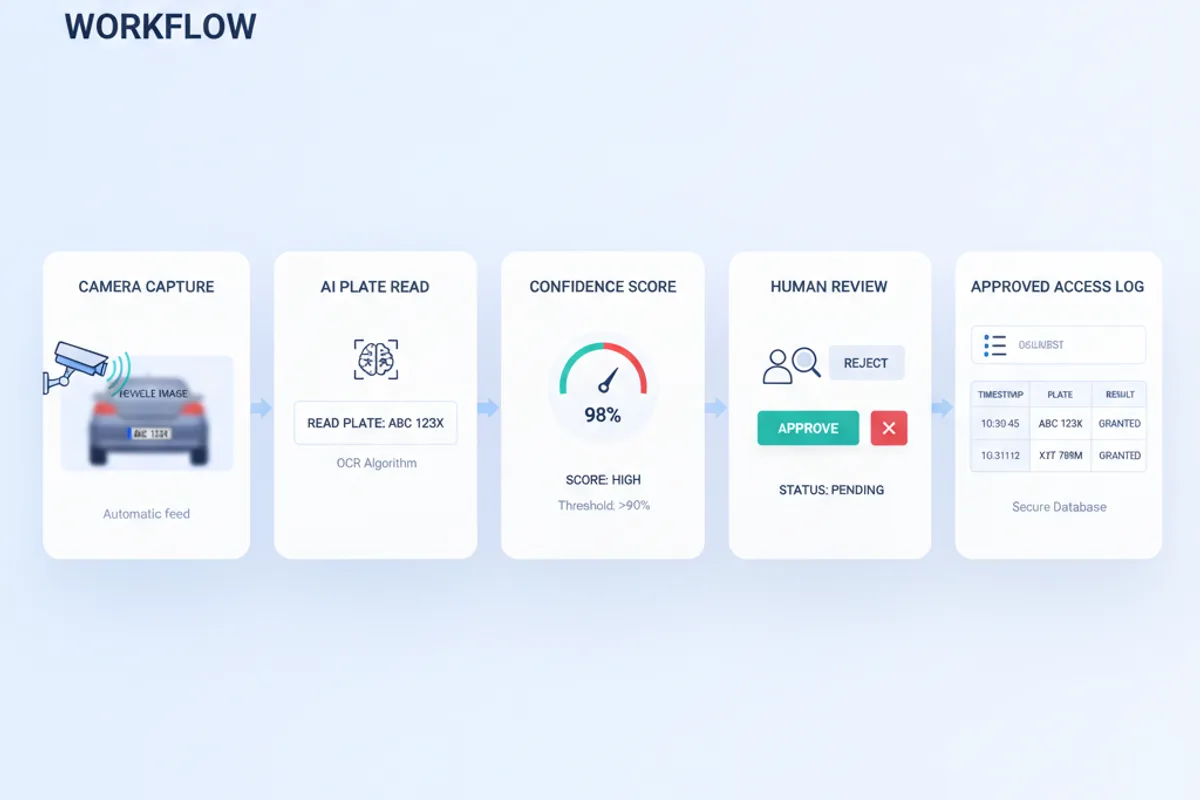
Short answer: HOA license plate recognition is a private-property workflow that uses cameras and AI software to read vehicle plates, match them to resident or visitor records, and help authorized community staff review vehicle activity. The safest deployments do not treat every read as final. They add confidence scoring, human review, audit logs, retention controls, and policy-based exceptions.
Key Takeaways
- HOA LPR should be designed around private-property workflows, not fear-based surveillance.
- Accuracy, privacy, retention, and audit logs should be board-level requirements.
- Resident and visitor workflows work best when vehicle records, confidence scoring, and human review are connected.
- Placa.ai is positioned as a practical, privacy-conscious cloud AI LPR platform for HOAs and other private-property operators.
What Accuracy Means for HOA License Plate Recognition
Direct answer: Accuracy is not just whether software can detect characters on a plate. For an HOA, accuracy means the system supports a fair operational decision.
Plate reads need context
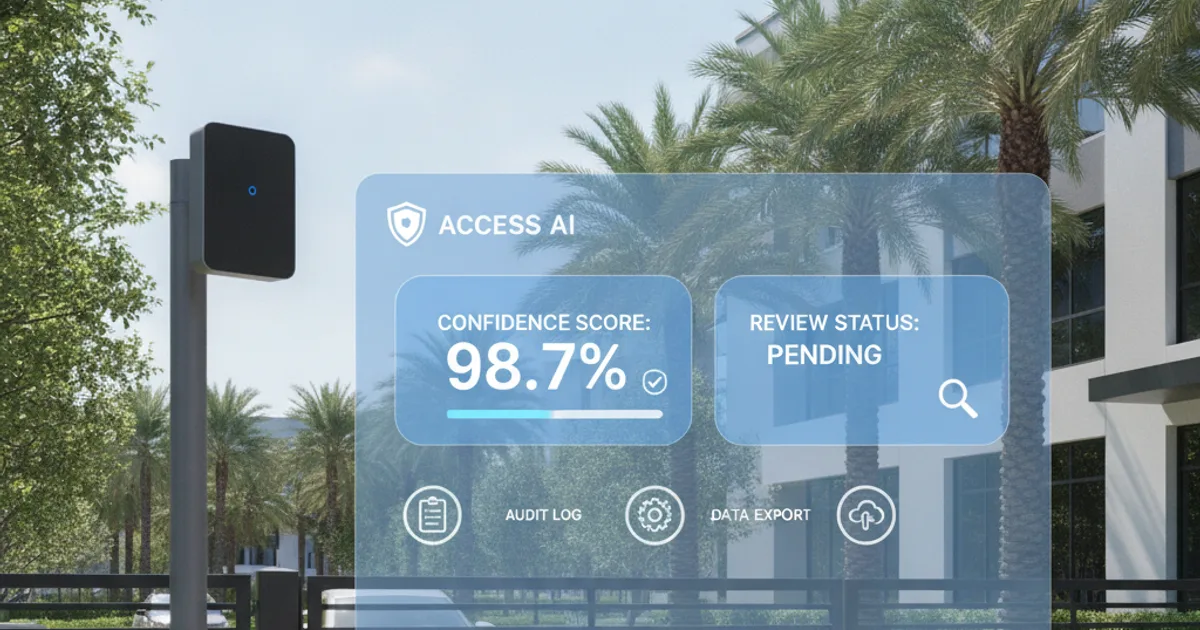
A camera may capture a vehicle entering a gated community, but the board still needs context before acting on that event. Is the vehicle registered to a resident? Is it a visitor with a temporary pass? Was the plate partly blocked, dirty, reflective, or captured at an angle? A useful HOA LPR workflow presents the read, the confidence score, the image evidence, the account match, and the history so staff can review the event before making an access or enforcement decision.
This is why Placa.ai positions LPR as a review workflow, not a magic answer machine. Confidence scoring, audit-friendly search, and resident vehicle records help the association understand what happened without pretending every read is perfect.
Why Character Confusion Matters
Direct answer: License plate recognition systems can confuse similar characters, especially when lighting, motion, plate design, or camera angle make the plate harder to read.
O versus 0 is a simple example
Recent public discussion around LPR has highlighted a practical issue: letters and numbers can look similar. O and 0 are the obvious example, but B and 8, S and 5, I and 1, and plate-frame obstruction can create the same kind of problem. For HOA board members, the lesson is not to reject LPR. The lesson is to choose a system that shows uncertainty clearly and gives administrators a way to confirm the event before it affects a resident, guest, vendor, or contractor.
An HOA should ask vendors how the platform displays low-confidence reads, whether staff can compare the image to the text result, and how corrections are documented.
How HOAs Can Reduce False Plate Reads
Direct answer: HOAs reduce false reads by combining better camera placement with software review controls.
Hardware and software both matter
Camera height, distance, lane angle, lighting, shutter speed, and vehicle speed all influence capture quality. Software then needs to interpret the image, return a result, and show the confidence behind that result. A board should avoid evaluating a neighborhood license plate reader only by price or by a sample demo. The better question is whether the system can handle the entrance layout, visitor flow, and exception policy that the community actually has.
For entrance planning, boards can compare this article with Placa.ai’s HOA license plate recognition camera guidance and the ALPR accuracy article in this cluster.
Review Workflows Protect Residents and the Board
Direct answer: Human review is not a weakness in an HOA LPR program. It is a governance control.
Use review for low-confidence or high-impact events
An HOA may allow a high-confidence match for routine resident gate access while requiring review for unknown vehicles, mismatched plates, repeated visitor exceptions, or enforcement-related events. The platform should make that distinction visible. A good review process also records who reviewed the event, what evidence they saw, and what action they took. Those audit logs help the board answer questions later without reconstructing decisions from memory.
If auditability is a priority, review Placa.ai’s cloud access audit logs resource and the cluster guide to HOA gate access with license plate recognition.
Privacy-Conscious Accuracy Checks
Direct answer: Accuracy and privacy are connected because bad data can create unnecessary resident friction.
Keep the workflow purpose-limited
HOA privacy license plate cameras should support defined private-property purposes: resident access, visitor access, vendor verification, incident review, and policy enforcement where the governing documents allow it. Retention settings should match those use cases. Administrator access should be role-based. Searches should be logged. Residents should know what the system captures and how they can correct vehicle registration information.
When accuracy checks are built into the workflow, the community can rely on LPR for practical operations without turning every vehicle record into an unreviewed enforcement trigger.
Board Governance and Resident Communication
Direct answer: HOA boards should treat LPR as a governed operating system, not just a camera purchase. The board should document the approved purpose, who can administer records, when manual review is required, how long data is retained, and how residents can update vehicle information or ask questions.
Make the policy easy to explain
A clear resident notice should say where cameras are used, what vehicle data is collected, why the association collects it, who can access it, and what safeguards are in place. It should also explain that LPR supports community access and operational review, not unlimited monitoring. This kind of plain-language communication helps property managers answer questions consistently and gives residents a practical path for correcting plate records, adding temporary vehicles, or understanding visitor access rules.
Boards should also review the workflow after launch. Early reviews can reveal camera placement issues, registration gaps, confusing visitor rules, or staff training needs. A short monthly review of low-confidence reads, manual overrides, resident support requests, and administrator searches can improve the system without changing the community’s broader structure or archive behavior.
HOA LPR Accuracy Checklist
- Ask whether the platform shows confidence scores.
- Require manual review for low-confidence or high-impact events.
- Confirm that staff can compare the image with the plate text result.
- Document correction workflows for resident vehicle records.
- Use audit logs for searches, exports, and administrative actions.
- Set retention periods that match the community’s stated purpose.
Suggested Internal Resources
- HOA license plate recognition camera – Placa.ai’s main HOA LPR resource.
- Access control – broader vehicle and gate access automation guidance.
- Cloud access audit logs – why administrator accountability matters.
- Contact Placa.ai – talk through your community entrance, gate, or vehicle access workflow.
Related HOA LPR Cluster Articles
- LPR accuracy – why plate readers can misread characters such as O and 0
- HOA license plate cameras – what boards should decide before installation
- HOA gate access with license plate recognition – how residents, visitors, and contractors can be managed at the entrance
FAQ
What is HOA license plate recognition?
HOA license plate recognition is a private-property vehicle workflow that uses cameras and AI software to read plates, match them to resident or visitor records, and help authorized staff review access, parking, or security events.
Can license plate readers misread plates?
Yes. LPR systems can misread plates because of glare, motion blur, plate angle, low light, dirty plates, unusual fonts, and character confusion such as O versus 0.
How can HOAs reduce false plate reads?
HOAs can reduce false reads with proper camera placement, adequate lighting, confidence scoring, human review, clear exception handling, and clean resident vehicle registration data.
Should every HOA LPR read be treated as final?
No. Routine high-confidence matches may be automated, but low-confidence reads and events that could affect access or enforcement should be reviewed by an authorized person.
How does Placa.ai support accuracy review?
Placa.ai supports practical review workflows such as confidence-aware plate events, vehicle records, audit-friendly review, and configurable retention for private-property use cases.
Do accuracy checks help resident privacy?
Yes. Accuracy checks help prevent bad data from becoming an unfair access decision, enforcement action, or resident dispute.
Conclusion: Build a System the Board Can Explain
HOA license plate recognition works best when the board can explain the purpose, the data controls, the accuracy review process, and the resident support path. Placa.ai helps communities think through LPR as an operating workflow: vehicles, visitors, access decisions, review, retention, and auditability. If your community is evaluating HOA LPR cameras, gate access, or a private community LPR system, start with the policy and workflow before buying hardware.
Request a Placa.ai HOA LPR consultation to review your entrance layout, resident vehicle process, visitor access needs, and privacy requirements.
Internal Resources
Data source: Community Associations Institute