
Flock Safety Alternative for HOAs: What to Look for in a Private Community LPR System
HOA boards often search for a Flock Safety alternative when they want license plate recognition but also want more control over community workflows, retention, and resident communication. A useful comparison should be factual, practical, and focused on what the HOA needs to govern.
Short answer: A Flock Safety alternative for HOAs is a license plate recognition platform that can support private community needs such as resident vehicle registration, visitor access, gate workflows, audit logs, retention controls, and HOA-level administration. The right comparison should focus on governance and workflow fit, not vendor attacks.
Key Takeaways
- HOA LPR should be designed around private-property workflows, not fear-based surveillance.
- Accuracy, privacy, retention, and audit logs should be board-level requirements.
- Resident and visitor workflows work best when vehicle records, confidence scoring, and human review are connected.
- Placa.ai is positioned as a practical, privacy-conscious cloud AI LPR platform for HOAs and other private-property operators.
Compare the Workflow, Not Just the Camera
Direct answer: A private community LPR system is more than a camera at the entrance.
Private-property use cases differ
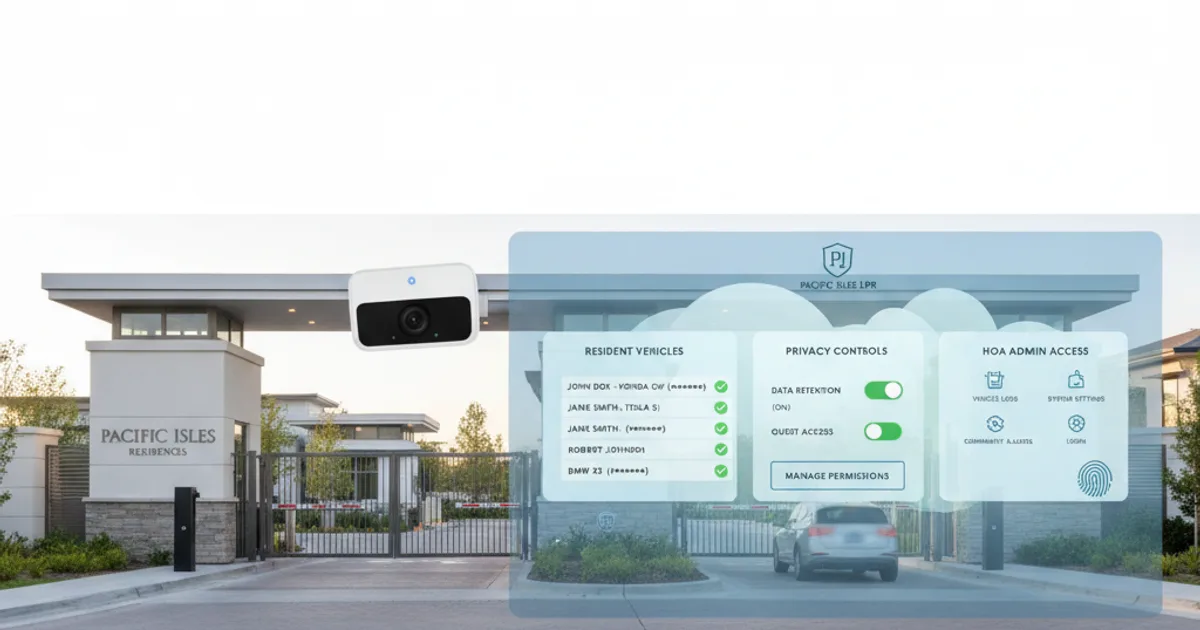
HOAs are not police departments, parking authorities, or citywide camera networks. A homeowners association usually needs resident vehicle registration, visitor verification, gate event history, vendor access records, private-road incident review, and board-level visibility. The system should support those private-property workflows without forcing the community into a model that does not fit its governance needs.
Placa.ai’s broader Flock alternative HOA LPR camera resource covers related comparison criteria.
Data Control and Retention
Direct answer: Data control is one of the most important comparison points for HOA boards.
Ask who can do what
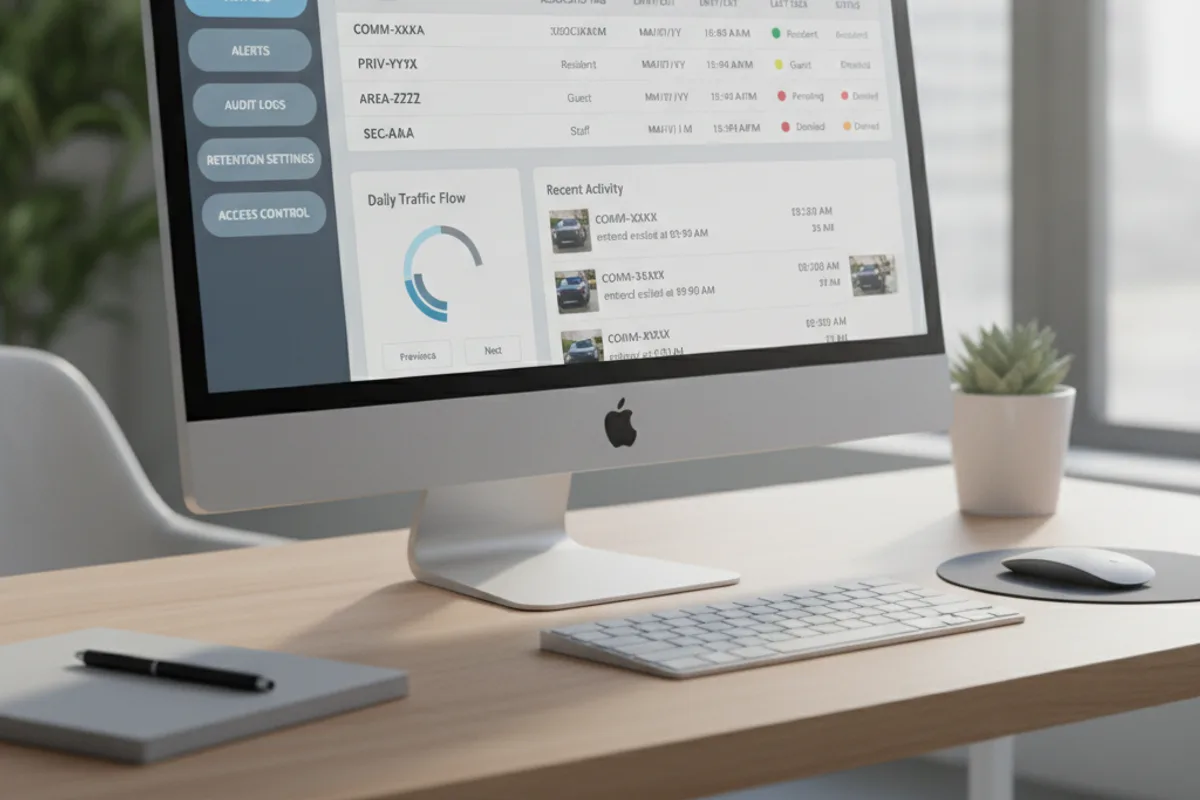
Boards should ask who can search events, who can approve exports, how long records are retained, whether administrators have role-based permissions, and whether searches are logged. The goal is not to make every outside request impossible. The goal is to avoid unclear data paths and to make sure the community’s policy is reflected in the software.
A system that gives the HOA configurable retention and audit visibility is easier to explain to residents than a black-box workflow.
Accuracy and Human Review
Direct answer: Any LPR system can face low-confidence reads, ambiguous characters, or imperfect captures.
Review tools should be visible
When comparing platforms, ask how confidence scores are displayed, how administrators review images, how corrected reads are stored, and whether the system distinguishes routine gate access from enforcement-sensitive events. Public concern about misreads is a reminder that workflow design matters as much as camera placement.
For more detail, read the cluster guides on HOA LPR accuracy checks and license plate reader accuracy for HOAs.
Resident and Visitor Workflows
Direct answer: A good HOA LPR platform should make common access cases easier for staff and residents.
Look for operational fit
The system should handle residents, household vehicles, caregivers, contractors, temporary vehicles, recurring guests, special events, and access exceptions. It should give property managers a clear view of vehicle status without making them maintain disconnected spreadsheets. If a platform only shows plate hits but does not help manage resident and visitor access, the HOA may still be stuck with manual work.
See the related article on HOA gate access with license plate recognition for gate-specific workflows.
How to Make a Fair Vendor Comparison
Direct answer: Boards can compare vendors without fear-based messaging or unsupported claims.
Use a decision matrix
A fair comparison lists requirements, asks each vendor the same questions, and scores the answers. Important criteria include camera fit, data governance, retention controls, audit logs, integrations, gate access support, visitor management, support model, pricing structure, and resident communication materials. Avoid absolute claims such as 100% accuracy or total elimination of false reads.
The right Flock Safety alternative for an HOA is the one that fits the association’s policy, community expectations, and operational workflow.
Board Governance and Resident Communication
Direct answer: HOA boards should treat LPR as a governed operating system, not just a camera purchase. The board should document the approved purpose, who can administer records, when manual review is required, how long data is retained, and how residents can update vehicle information or ask questions.
Make the policy easy to explain
A clear resident notice should say where cameras are used, what vehicle data is collected, why the association collects it, who can access it, and what safeguards are in place. It should also explain that LPR supports community access and operational review, not unlimited monitoring. This kind of plain-language communication helps property managers answer questions consistently and gives residents a practical path for correcting plate records, adding temporary vehicles, or understanding visitor access rules.
Boards should also review the workflow after launch. Early reviews can reveal camera placement issues, registration gaps, confusing visitor rules, or staff training needs. A short monthly review of low-confidence reads, manual overrides, resident support requests, and administrator searches can improve the system without changing the community’s broader structure or archive behavior.
Private Community LPR Evaluation Criteria
- HOA-level data administration and role-based access
- Configurable retention and clear deletion policies
- Search, export, and administrator audit logs
- Resident vehicle registration and visitor access workflows
- Low-confidence read review and correction workflows
- Gate access and access control integration options
- Resident-facing policy support and plain-language documentation
Suggested Internal Resources
- HOA license plate recognition camera – Placa.ai’s main HOA LPR resource.
- Access control – broader vehicle and gate access automation guidance.
- Cloud access audit logs – why administrator accountability matters.
- Contact Placa.ai – talk through your community entrance, gate, or vehicle access workflow.
Related HOA LPR Cluster Articles
- HOA license plate cameras – what boards should decide before installation
- HOA license plate recognition accuracy checks – how confidence scoring and review workflows reduce risk
- HOA gate access with license plate recognition – how residents, visitors, and contractors can be managed at the entrance
FAQ
What is a Flock Safety alternative for HOAs?
It is an LPR platform that can support HOA-specific private community workflows such as resident vehicle records, visitor access, gate events, retention controls, and audit logs.
Should HOAs compare vendors only by camera hardware?
No. Boards should compare workflow, data governance, retention, audit logs, review controls, support, and gate integration, not just camera hardware.
Can a private community LPR system support privacy controls?
Yes. A privacy-conscious system can include role-based access, configurable retention, audit logs, limited exports, and resident-facing policy documentation.
Does an alternative mean law enforcement access is always bad?
No. The important question is whether outside sharing follows the community’s policy, legal obligations, and documented approval process.
What should HOAs avoid when evaluating alternatives?
Avoid unsupported claims, fear-based vendor comparisons, promises of 100% accuracy, and systems that cannot explain data control clearly.
How does Placa.ai position itself for HOAs?
Placa.ai positions itself as a practical, cloud AI LPR platform for private-property workflows with review, auditability, retention, and access control use cases.
Conclusion: Build a System the Board Can Explain
HOA license plate recognition works best when the board can explain the purpose, the data controls, the accuracy review process, and the resident support path. Placa.ai helps communities think through LPR as an operating workflow: vehicles, visitors, access decisions, review, retention, and auditability. If your community is evaluating HOA LPR cameras, gate access, or a private community LPR system, start with the policy and workflow before buying hardware.
Request a Placa.ai HOA LPR consultation to review your entrance layout, resident vehicle process, visitor access needs, and privacy requirements.
Data source: Community Associations Institute