
Cloud AI vehicle access intelligence
Placa.ai helps properties turn compatible cameras, gates, and parking areas into a searchable vehicle recognition and access-control layer for parking lots, HOAs, apartments, schools, self-storage facilities, valet operations, and enforcement teams.
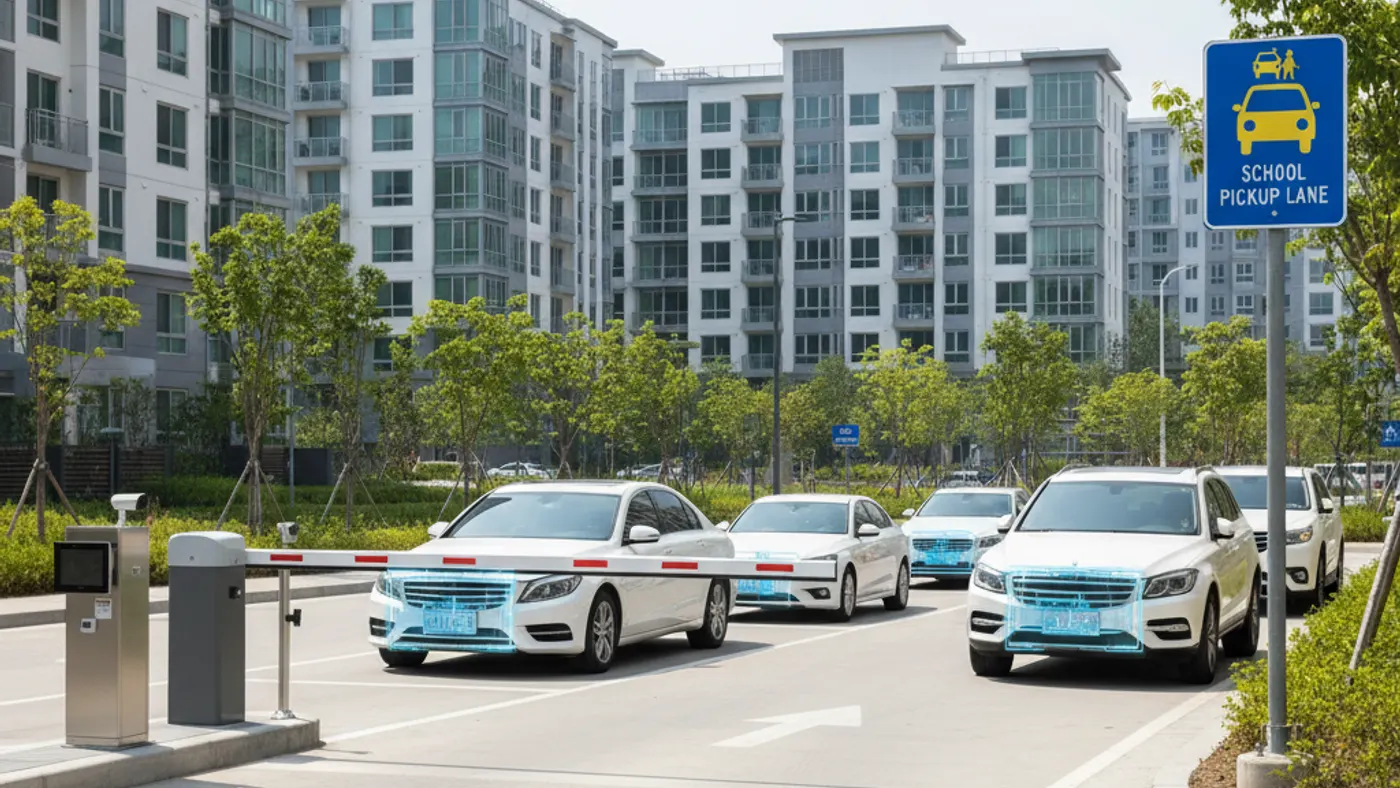
Why Properties Need More Than Passive Cameras
Passive cameras are valuable, but they often answer only one question: what did the video show? Property owners, school leaders, HOA boards, self-storage operators, valet teams, and parking managers usually need a second answer: which vehicle was involved and what should happen next?
Parking lots need searchable vehicle history. Gates need verified access. Schools need safer dismissal flow. Self-storage facilities need temporary and revocable access. Apartments and HOAs need resident and guest vehicle authorization. Towing and enforcement teams need plate-based evidence, repeat history, and a workflow that is easier to audit than a folder of video clips.
That is where Placa.ai fits. It does not ask every property to become a camera-trailer company. It adds a cloud AI vehicle identity layer to compatible cameras and access points so teams can recognize vehicles, verify permissions, trigger workflows, and keep cleaner records.
What Is Mobile License Plate Recognition Security?
Mobile license plate recognition security is a vehicle identification and access intelligence system that uses cameras and AI to read license plates, verify vehicle permissions, trigger workflows, and log events across parking lots, gates, campuses, and controlled-access properties.
The word mobile can mean a vehicle-mounted camera, a temporary trailer, a solar camera unit, or a flexible deployment that can be moved as a property changes. For Placa.ai, the important part is not the trailer shape. The important layer is vehicle intelligence: reading a plate, checking whether that vehicle is allowed, and turning the event into something useful for access, enforcement, pickup, parking, or review.
Placa.ai vs Traditional Mobile Surveillance
| Capability | Traditional mobile surveillance / camera-first security | Placa.ai cloud LPR platform |
|---|---|---|
| Watches the area | Strong fit for visual monitoring and deterrence. | Adds vehicle identity and event intelligence to camera coverage. |
| Identifies vehicles | Often depends on manual video review or separate LPR add-ons. | Reads plates and turns vehicle movement into searchable records. |
| Searches by plate | May require added software or manual review. | Built around plate, time, location, and status search. |
| Supports access permissions | Usually outside the core camera workflow. | Connects recognized vehicles to permission rules. |
| Triggers gates | Not usually the primary workflow. | Can support compatible dry contact gate workflows where appropriate. |
| Works with existing cameras | Hardware package often drives the deployment. | Designed for compatible IP cameras, gate cameras, mobile units, or recommended LPR cameras. |
| Supports schools | Useful for visual monitoring. | Can support vehicle authorization, QR fallback, staff approval, and dismissal coordination. |
| Supports self-storage | Useful for facility visibility. | Supports tenant vehicle access, temporary permissions, and gate logs. |
| Supports valet/self-parking | Records activity. | Recognizes arrivals and connects events to parking workflows. |
| Supports towing/enforcement | Provides video evidence. | Adds plate-based evidence, repeat history, and audit trails. |
| Event logs and audit trails | Video timeline may be the primary record. | Structured vehicle-event logs are central to the platform. |
| Hardware flexibility | Often tied to a specific mobile unit or camera package. | Hardware-agnostic after compatibility review. |
Where Placa.ai Fits
Parking Lot Security
Search vehicle events, support after-hours review, and connect plate history to parking operations.
Gate Access Control
Use plate recognition to evaluate access permissions and support compatible gate workflows.
HOA Communities
Give boards a privacy-minded vehicle access layer for residents, guests, and vendors.
Apartment Complexes
Support resident, visitor, delivery, vendor, and parking access workflows.
Self-Storage Facilities
Verify tenant vehicles and create gate audit trails for controlled-access facilities.
School Pickup Lines
Connect vehicle recognition to authorized pickup and staff-controlled dismissal.
Valet and Self-Parking
Recognize arrivals, improve vehicle flow, and maintain operational history.
Towing and Enforcement
Document plate-based evidence and repeat-vehicle patterns for enforcement teams.
Commercial Campuses
Manage vehicle events across lots, gates, deliveries, and visitor areas.
Hardware-Agnostic by Design
Hardware-agnostic LPR means the recognition and workflow layer is not locked to one camera package. Placa.ai can review compatible IP cameras, LPR cameras, fixed pole-mounted cameras, gate cameras, parking lot cameras, mobile camera units, and solar trailer deployments.
Some locations can use existing infrastructure. Others need a purpose-built plate camera because the lane angle, distance, night lighting, speed, or reflective plate conditions make standard video unreliable. Placa.ai can help evaluate those tradeoffs through the camera recommendation request and related products including RoadCam, RoadCam Pro, RadarCam Lite, RadarCam, and EnforcementCam.
Gate Automation and Wireless Dry Contact Trigger
LPR-connected gate access works by recognizing an approaching vehicle, checking the plate against an authorization list, evaluating the access rule, triggering a compatible gate workflow when approved, and logging the event for review.
For gated communities, self-storage, and apartments
Use Placa.ai to plan temporary, recurring, revoked, and role-based access rules before installing more hardware.
From Passive Video to Vehicle Intelligence
Placa.ai turns camera moments into structured vehicle events: plate reads, timestamps, locations, vehicle association, authorization status, alerts, reporting, and audit history. The result is a workflow layer that can support security teams, parking operators, school staff, facility managers, property managers, and enforcement teams without asking them to manually scan hours of video every time a vehicle question comes up.
Vertical Use Cases
Parking Lot Security
Parking managers need more than a recording of what happened. They need searchable vehicle history, evidence for disputes, overnight access visibility, and a workflow for vehicles that should not be on the property.
LPR parking lot security uses cameras and cloud AI to turn vehicle movement into searchable events. Instead of reviewing hours of video, operators can search by plate, time, location, authorization status, or repeat activity.
HOA Communities
HOA boards want better gate records and resident convenience without turning the neighborhood into a broad surveillance network. The strongest use case is private-property access control with clear rules and owner-controlled data.
HOA license plate recognition verifies resident, guest, vendor, and contractor vehicles at controlled entrances. It helps boards keep gate audit logs, manage recurring and temporary permissions, and reduce dependence on shared keypad codes.
Apartment Gate Access
Apartment access teams deal with resident vehicles, guest permissions, delivery drivers, vendors, move-ins, and parking abuse. Shared keypads and fobs can create friction and weak auditability.
Apartment gate access LPR uses plate recognition and cloud permissions to help communities verify vehicles, support visitor and vendor rules, and maintain an entry history without requiring every driver to use a code.
Self-Storage Gate Access
Self-storage operators need tenant access that is convenient, revocable, and auditable. Temporary users, delinquent accounts, contractors, RV storage, and after-hours access all require clear vehicle-level records.
Self-storage license plate recognition gate access checks tenant vehicles against rules, supports temporary or recurring access, and records gate events so facility teams can review who entered, when, and from which access point.
School Pickup Line License Plate Recognition
School pickup lines need safe authorization, staff control, and smooth traffic flow. A strong system should support LPR when plates are available, QR fallback when needed, staff approval, and a private audit trail.
School pickup line LPR recognizes vehicles during dismissal and connects the vehicle to an authorized pickup workflow. Placa.ai can support QR fallback, staff approval, dismissal coordination, and privacy options for campuses that need a balanced approach.
Valet and Self-Parking
Valet and self-parking operations depend on recognizing arrivals, matching vehicles to customers or tickets, keeping traffic moving, and documenting vehicle events when questions arise.
Valet parking LPR software reads plates at arrival or exit points and connects the vehicle event to the parking workflow. For self-parking, it can support access automation, audit history, and customer flow improvements.
Parking Enforcement Software with License Plate Recognition
Parking enforcement teams need evidence, repeat-vehicle history, clear timestamps, and workflows that do not depend on manual lot walks or fragile local hardware.
Parking enforcement LPR software captures plate-based vehicle events, helps identify unauthorized or repeat vehicles, supports evidence review, and creates a defensible audit trail for enforcement or towing workflows.
Frequently Asked Questions
What is mobile license plate recognition security?
Mobile license plate recognition security is a vehicle identification and access intelligence system that uses cameras and AI to read license plates, verify vehicle permissions, trigger workflows, and log events across parking lots, gates, campuses, and controlled-access properties.
Can Placa.ai work with existing cameras?
Placa.ai is designed to be hardware agnostic where the camera, angle, lighting, network, and image quality are compatible with license plate recognition. Existing IP cameras can be reviewed before deployment, and Placa.ai can also recommend purpose-built LPR cameras when a site needs better plate capture.
Does Placa.ai require a specific camera brand?
No single camera brand is required for every deployment. The practical requirement is that the camera and installation can produce plate images suitable for recognition. Placa.ai reviews lane geometry, distance, lighting, speed, and camera stream quality before recommending a final setup.
Can Placa.ai open a gate?
Placa.ai can support gate workflows where a recognized plate is checked against an authorized list and a compatible gate controller can be triggered through an approved integration, including dry contact workflows where appropriate. The exact design depends on the gate hardware and site requirements.
Can LPR replace a keypad?
LPR can replace or reduce dependence on keypad entry for many vehicle workflows, but many properties keep a fallback method for visitors, missed reads, emergency access, or non-vehicle entry. The best design depends on the property access policy.
Is LPR useful for parking lot security?
Yes. LPR helps parking teams search vehicle history, verify vehicles tied to permits or watchlists, review overnight activity, and support enforcement workflows with plate-based timestamps and location history.
How does LPR help self-storage facilities?
Self-storage LPR helps facilities verify tenant vehicles, grant temporary access, revoke permissions, review gate events, and reduce dependence on shared keypad codes.
How does LPR help apartment communities?
Apartment communities can use LPR to support resident access, visitor rules, vendor entry, parking authorization, and searchable access logs across one or multiple properties.
How does LPR help HOAs?
HOAs can use LPR for resident and guest gate access, gate audit trails, contractor permissions, privacy-minded data control, and reduced manual gate log work.
How does LPR help school pickup lines?
School pickup LPR can recognize authorized vehicles, support staff approval, coordinate dismissal queues, keep an audit trail, and use QR or manual fallback when a plate is not available.
Is Placa.ai a mobile surveillance trailer?
Placa.ai is not only a mobile surveillance trailer. It is a cloud AI vehicle recognition, authorization, and access intelligence platform that can work with compatible cameras, fixed deployments, mobile units, gates, and parking workflows.
Can Placa.ai be used with solar trailers?
Placa.ai may be used with compatible solar trailer or mobile camera deployments when camera position, stream quality, connectivity, and plate-capture conditions support reliable LPR workflows.
What happens if a plate is not recognized?
Every LPR deployment should include an operational fallback. Depending on the use case, that may include staff approval, QR code verification, manual lookup, intercom review, keypad entry, or a temporary access process.
Can access permissions be revoked?
Yes. Access permissions can be designed to be temporary, recurring, role-based, or revoked depending on the workflow and integration requirements.
Does Placa.ai support audit logs?
Yes. Placa.ai is built around vehicle events, timestamps, locations, authorization status, and workflow history so property teams can review what happened without relying only on raw video review.
Privacy, Governance, and Rollout Planning
A strong vehicle access intelligence deployment starts with policy before hardware. Placa.ai recommends defining who can view vehicle events, how long records should be retained, which staff roles can edit authorization lists, and what fallback workflow applies when a plate is missed or a vehicle is not yet registered. These decisions help the system support property operations without creating unnecessary access to sensitive records.
For multi-site organizations, the rollout can begin with one controlled entrance, one parking lot, one school pickup lane, or one self-storage gate. That pilot should measure plate capture quality, staff workflow fit, authorization accuracy, exception handling, and reporting value. Once the pilot is stable, the same cloud workflow can be expanded to additional lanes, cameras, gates, or properties with clearer deployment standards.
Placa.ai is positioned for private-property operational control. The goal is not broad public surveillance; the goal is to help the property identify vehicles tied to a legitimate access, parking, pickup, enforcement, or audit workflow. That distinction matters for HOA boards, school administrators, apartment operators, self-storage owners, and commercial parking teams that need practical accountability with clear boundaries.
Operational Rollout Model
For teams comparing mobile surveillance, fixed parking cameras, and access-control upgrades, Placa.ai can serve as the connecting software layer between those investments. A property may keep general video monitoring for broad visibility while using LPR at decision points such as entrances, exits, pickup lanes, tenant gates, valet lanes, or enforcement routes. That separation keeps the project practical: cameras watch the area, while Placa.ai helps identify vehicles and connect them to approved workflows.
The most successful deployments also define measurable outcomes before launch. Parking teams may track faster evidence review and fewer manual patrol steps. Gate operators may track reduced code sharing and clearer guest access records. Schools may track smoother dismissal coordination and better staff visibility. Self-storage operators may track tenant access exceptions and revocation accuracy. These operational measures help the platform prove value without relying on broad or unsupported safety claims.
See How Placa.ai Can Turn Your Cameras, Gates, and Parking Areas Into a Vehicle Access Intelligence System.
Bring your gate layout, camera questions, parking workflow, school dismissal process, or enforcement challenge. Placa.ai can help map what should be recognized, what should happen next, and what should be logged.