

Towing LPR and Parking Enforcement
Mobile LPR for towing companies, patrol vehicles, apartment enforcement, cloud events, real-time alerts, and scalable parking patrols.
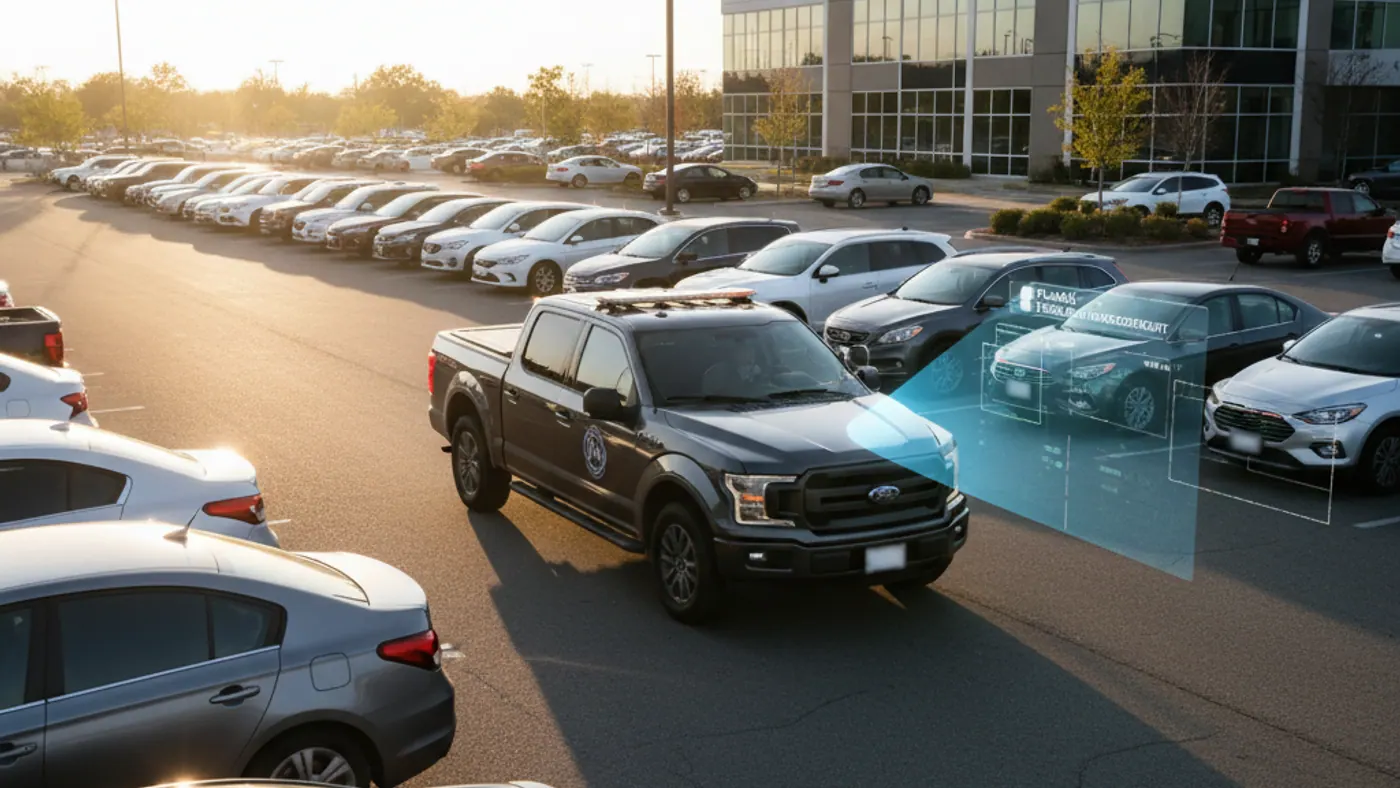
Mobile LPR for towing companies uses patrol vehicle cameras and license plate recognition software to read plates while drivers move through lots, communities, and enforcement routes. Placa.ai supports cloud LPR events, searchable history, alerts, and hardware-flexible workflows for towing operations where the camera setup and network conditions are properly configured.
Compatibility depends on camera angle, image quality, lighting, stream access, network reliability, and deployment configuration.
Typical Towing Patrol Challenges
A towing company may have several drivers patrolling different apartment and commercial properties in the same night. One driver knows a property well, another is new, and a third is covering a route after a schedule change. Without a shared plate event history, every driver starts from scratch. Mobile LPR helps create a common record so dispatchers and managers can review patrol activity across vehicles and properties.
What Placa.ai Adds to Towing Patrols
Faster Patrol Review
Drivers can reduce manual plate entry and work from plate events instead of scattered notes and unclear photos.
Searchable Evidence
Cloud event logging can preserve timestamps, plate reads, route context, and review history for easier dispute handling.
Flexible Deployment
Placa.ai is designed to adapt to many properly configured towing and patrol camera workflows instead of locking teams into one hardware stack.
Moving Patrol Vehicles
Mobile LPR has to work in a moving environment. Plate angle, speed, lighting, motion blur, lane width, and camera placement all affect read quality. A good deployment starts with the patrol route, not just the camera model.
Real-Time Violation Workflows
A patrol workflow can notify drivers or operators when a plate requires review. That may mean an expired permit, unauthorized vehicle, repeat offender, time-limit violation, or manual confirmation step.
Apartment and Community Patrols
Apartment and HOA patrols are recurring, policy-driven routes. Mobile LPR can support consistent documentation across these routes while still leaving enforcement actions to the towing company and property rules.
Cloud Enforcement Workflow
Cloud LPR helps managers view activity remotely, search plate history, and troubleshoot routes without pulling storage from a vehicle. This can simplify training and onboarding for drivers.
Scalable Patrol Operations
As a towing company adds properties or patrol vehicles, cloud workflows can reduce local hardware complexity. Compatibility still depends on the camera and network conditions of each deployment.
Workflow Comparison
| Workflow | Where It Helps | Operational Tradeoff |
|---|---|---|
| Single-property manual patrol | Works when volume is low | Does not scale well across routes |
| Local-only vehicle system | Keeps data near the truck | Harder remote visibility and support |
| Cloud mobile LPR | Shared event history and remote visibility | Needs reliable connectivity and deployment planning |
Improve Your Parking Enforcement Patrol
Placa.ai can help evaluate your patrol routes, tow truck camera setup, apartment and HOA enforcement workflow, evidence requirements, and cloud LPR readiness.
Frequently Asked Questions
Can mobile LPR scan while driving?
Yes, with the right camera placement, shutter behavior, lighting, and speed conditions. Every deployment should be tested under real patrol conditions.
How can patrol vehicles use LPR?
Patrol vehicles can collect plate events as they move through parking rows, entrances, and enforcement routes, then send those events to a cloud workflow for review.
Can mobile LPR help driver onboarding?
Yes. A searchable event workflow can make it easier for new drivers to understand routes, property rules, and enforcement history.
Does cloud LPR require constant connectivity?
Cloud workflows depend on network reliability. Some deployments may need buffering or operational procedures for weak coverage areas.
Can this work for private-property towing?
Yes. Private-property towing is a strong fit when patrol routes, camera setup, permissions, and property rules are clearly defined.
What alerts can towing LPR support?
Alerts can support review of unauthorized vehicles, repeat offenders, expired permits, flagged plates, or property-specific rules, depending on configuration.
Internal Resources
- California ALPR Policy Checklist for Parking and Property Operators
- How Tow Dispatch Managers Can Manage Overnight Patrol Routes With Mobile LPR Workflows
- How Hospitality Groups Can Track Repeat VIP Vehicles Using Ticketless Vehicle Recognition
- How Florida Associations Can Reduce Visitor Parking Abuse Without Creating Resident Friction
- How Community Managers Can Protect Limited Guest Spaces Without Creating Resident Friction
Data source: U.S. Department of Transportation