

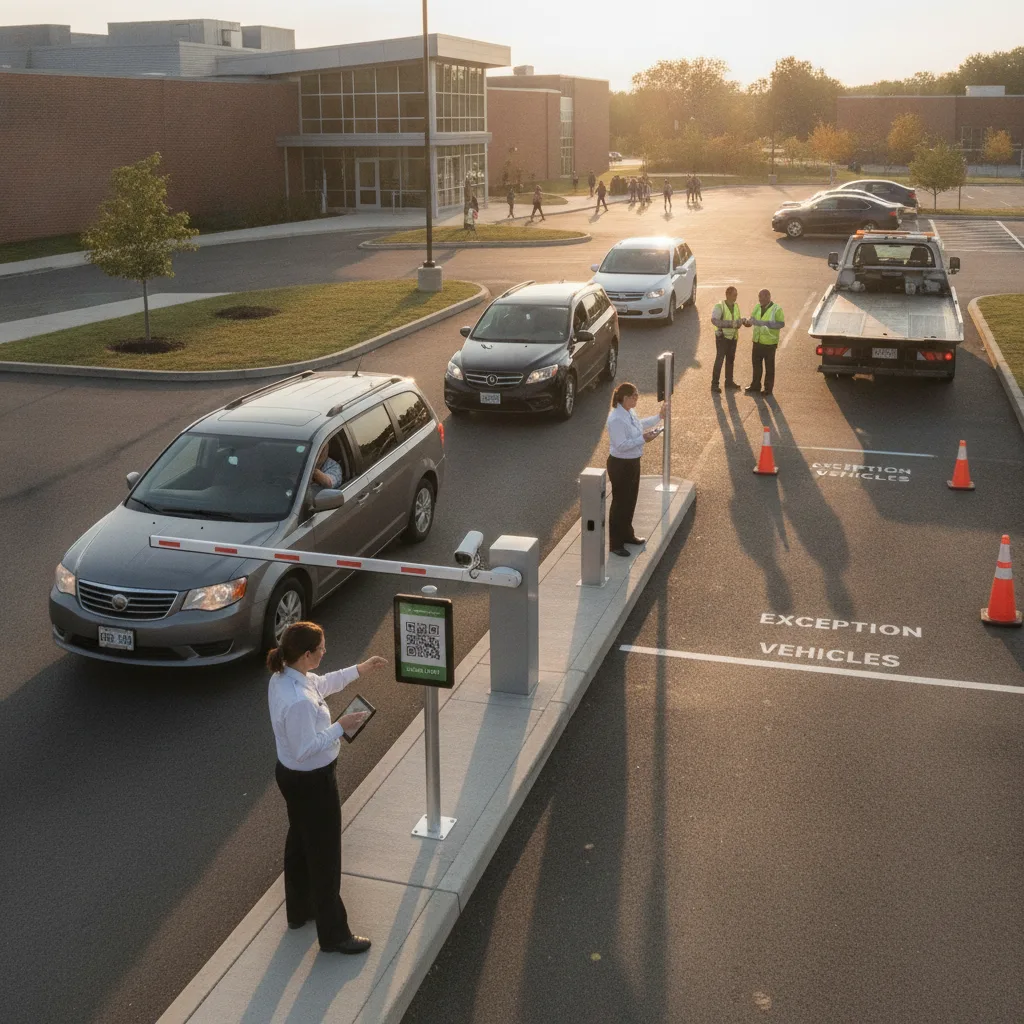
Direct answer: On a multi-day event lot, the fix for re-entry friction isn’t a second QR scan at the gate — it’s linking the plate captured at the original purchase to the paid session, so a returning vehicle is recognized automatically on day two and day three without anyone reopening the parking app. The QR flow still owns the initial sale (rate, date range, vehicle details); the plate becomes the credential for every re-entry after that.
This matters most at night. A car that left for dinner or fireworks and comes back at 11 PM into a queue of two hundred vehicles does not want to dig out a phone, reload an app on spotty venue Wi-Fi, and rescan a code an attendant can barely see under a flashlight. A plate read takes a fraction of a second and doesn’t depend on the driver’s signal strength.
Where the friction actually shows up
Most event lots that already sell QR passes run into the same wall: the QR code proves someone paid, but it doesn’t by itself prove which car is coming back. If the plate captured at first entry isn’t stored against that paid session, every re-entry defaults to a full re-scan, and re-scans are where queues back up — especially on a temporary gate running on a generator with a camera that hasn’t been aimed and tested in daylight.
Operational example: A three-night music festival sells 4,000 multi-day passes. Night one, every car gets plate-captured at purchase. Night two, the same plate should roll through an express lane with no scan required. The exceptions are what a plan has to name in advance: a rental car swapped mid-event, a carpool that changes drivers, or a camera read degraded by rain and headlight glare.
Event Lot Managers: re-entry decision table
| Re-entry scenario | What the gate needs to verify | Attendant action |
|---|---|---|
| Same plate, valid multi-day pass | Plate matches a session with an active date range | Auto-open, no scan or attendant stop required |
| Vehicle swap mid-event | Plate has no matching session | Route to fallback lane; verify by name or order confirmation |
| Carpool changed drivers | Multiple plates against one pass in a single event window | Manual override with a named exception and expiry at event close |
| Low camera confidence (rain, glare) | Read confidence below the accept threshold | Fallback lane; attendant confirms against purchaser name or last 4 of plate |
| Vendor or staff vehicle | Vehicle is not part of the general attendee pass pool | Separate credential type, never folded into the attendee auto-pay list |
Run the re-entry workflow in four stages
- Day-one purchase and capture: the QR sale collects the rate and date range; the plate read at first entry gets tied to that specific session, not just to a generic pass ID.
- Mid-event re-entry match: every gate camera checks incoming plates against active sessions first, before falling back to a QR prompt.
- Exception lane handling: swapped vehicles, carpool changes, and low-confidence reads go to a staffed lane, not the express lane, and get logged with who approved the override.
- Post-event reconciliation: match total gate entries against sold passes and exception overrides so the promoter settlement isn’t built on guesswork.
Multi-day events are usually staffed with seasonal or temp gate workers who rotate nightly, so the exception process has to be simple enough that someone working their first shift can follow it without prior context on the lot’s history. A written grace period workflow for late returns (fireworks, headliner sets running past close) keeps that first shift from inventing its own rules on the fly.
What to measure during the pilot
Run the express-lane approach for at least one full multi-day event before deciding it works everywhere:
- Percent of re-entries matched by plate with no app or QR interaction needed
- Fallback lane volume as a share of total re-entries
- Vehicle-swap and carpool exceptions logged, by night
- Average queue time at the express lane versus the fallback lane
- Reconciliation discrepancies between gate counts and sold passes at event close
Feed those gate counts and exception logs into an operator reconciliation checklist before the promoter settlement meeting; a night-by-night log is easier to defend than a single end-of-event total. Because pass-sharing across unrelated vehicles is one of the more common abuse patterns on multi-night events, it’s worth reviewing the site’s QR payment fraud controls alongside the exception table above.
Before expanding past the pilot lane
Don’t roll plate-based re-entry out to every gate until the exception lane has actually been tested under load — a rained-out night or a headliner running late is a better test than a clear, on-schedule evening. Confirm who owns the override decision at 1 AM when the event manager who approved the process is off-site, and confirm what happens if the camera or network goes down mid-event and the gate has to fall back to manual ticket-taking entirely.
Plan a limited gate pilot
Bring your event schedule, gate layout, and current QR pass structure. PLACA.AI can help scope a single-gate plate re-entry pilot for your next multi-day event without assuming your lot works like the last one.
Editorial refresh: September 19, 2026. Independently confirm current product capabilities, third-party features, pricing, contracts, governing requirements, and local rules before acting.
Internal Resources
- How Tow Dispatch Managers Can Compare Patrol Software Workflows With Mobile LPR Workflows
- How Private Lot Owners Can Simplify Guest Parking Payments Without Adding More Hardware
- How Venue Parking Managers Can Reduce Guest Wait Time Complaints Using Ticketless Vehicle Recognition
- How Hotel Parking Teams Can Launch Scan And Pay Parking Without Adding More Hardware
- How Parking Operators Can Support Event Parking Prepayment Without Adding More Hardware
Data source: U.S. Department of Transportation